
Last updated November 16, 2026
 Sweep & inspection
 Caps & crowns
 Flue relining
 Masonry repair
 Gas fireplace service
Level 1 sweep and inspection to the NFPA 211 annual standard - flue, crown, cap, and flashing checked and photographed
Chimney sweep logs do not sweep chimneys. They loosen some creosote - which then falls where a brush and vacuum still have to collect it.
Chimney Sweep Maintenance Checklist for Springfield Homeowners
The chimney cap you forgot to check last October is probably the reason you have a moisture problem right now. Cap failures are the most preventable source of chimney deterioration in New England homes, and in Springfield they’re the first thing we look at when a homeowner calls about a damp smell or crumbling mortar. Water gets in through a missing or rusted cap, freezes in the masonry over a Springfield winter, and by spring the crown has a crack you never saw. This checklist is built around what chimneys here actually fail at, month by month, not generic national averages. You’ll learn what you can safely check yourself, what needs a certified sweep, and how to log it all so next year’s inspection starts with real information instead of guesswork.
Quick Answer
A homeowner maintenance checklist for a Springfield chimney means four things: a visual check of the cap, crown, and exterior masonry from the ground each season; an annual professional inspection and sweep before burning season; a firebox check after the first three burns to catch overdue creosote; and a written log of condition year over year so you can see whether the chimney is holding steady or trending toward repair. Most of the work is watching. The sweep’s job is measuring and documenting what you can’t safely reach.
Styles & brands we work with
- Sweep & inspection
- Caps & crowns
- Flue relining
- Masonry repair
- Gas fireplace service
Table of Contents
- Why a Written Checklist Beats a Reminder
- The Month-by-Month Springfield Chimney Calendar
- Ground-Level Checks You Can Do Without Equipment
- What the Firebox Tells You After the First Three Burns
- How to Log Chimney Condition Year Over Year
- DIY-Safe Maintenance vs. What Needs a Certified Sweep
- When to Book a Chimney Sweep in Springfield
- Common Mistakes to Avoid
Why a Written Checklist Beats a Reminder
Most homeowners treat chimney care as a single annual task: remember to book a sweep, get it done, move on. That works until something goes wrong. A checklist that records condition, not just completion, turns each visit into a data point. When we open a firebox and find a hairline crack in a flue tile, the homeowner who has three years of notes telling us the mortar looked tight and dry each fall knows something changed this year. The homeowner without notes just knows there’s a problem now.
Chimneys fail slowly and then quickly. Moisture works through masonry in cycles of freeze and thaw, which Springfield gets plenty of between December and March. Small crown cracks widen. A missing cap allows water in and lets birds and squirrels nest in the flue. Spalling brick on the exterior is the visible end of a process that started two or three seasons earlier. A checklist catches the early stage.
There’s a second reason to write things down. A sweep who arrives with your notes walks into a job with context. We can tell the difference between a chimney that’s always been slightly drafty and one that started drafting poorly this year after a liner or cap change. That distinction often decides whether a repair is necessary or whether the answer is simply “clean it and keep watching.” If you’re new to a home, the log starts at your first inspection and gets more useful every year after.
A written checklist also protects you from unnecessary work. When we recommend a repair, we want to be able to show you exactly what changed and what it looks like now. A year of notes makes that conversation much shorter.
The Month-by-Month Springfield Chimney Calendar
Springfield’s weather does more to a chimney than people expect. Warm, humid summers push moisture into masonry. Cold winters freeze that moisture and crack it. Spring rain drives sideways against the crown and cap. A calendar built around that cycle keeps the work aligned with what the chimney is actually facing instead of guessing at seasons in the abstract.
Here’s how we’d structure the year, tuned to Springfield’s climate and housing stock rather than a generic annual reminder:
- March – end-of-winter ground check. After the last hard freeze, walk the yard and look at the crown, cap, and brick from ground level with binoculars. Winter is when moisture damage shows. Log what you see.
- April – book the annual inspection. Spring is the right time to have a sweep look inside, because the firebox is idle and any masonry work can be scheduled before the fall rush. This is also when we catch the year-over-year drift that signals a repair.
- May – exterior masonry review. Confirm the crown is sound and the mortar joints are tight. If spalling brick or a cracked crown shows up, get it scheduled before summer humidity works deeper in.
- June through August – repair window. Masonry work, cap replacement, and liner or resurfacing jobs go here. Warm, dry weather is when materials cure correctly, and getting repairs done off-season means you’re not competing with fall bookings.
- September – pre-season sweep. Clear creosote, check the damper and firebox, verify the cap is intact, and confirm the flue path is clear before the first burn.
- October – smoke test and first-burn check. First fire of the season is a diagnostic event. Watch the draft, watch for smoke coming back into the room, and note anything unusual in your log.
- November through February – burn season observation. Ground check the cap after any notable snowfall or ice, watch for staining on the exterior, and keep an eye on how the fire draws.
You don’t have to hit every item yourself. The value is that each one is scheduled and tied to something real: a freeze, a rainstorm, the first burn. A checklist you can picture in your calendar is one you’ll actually follow. This is the same calendar we use when we build a scope for a chimney sweep visit.
Ground-Level Checks You Can Do Without Equipment
Most of the highest-value chimney checks don’t require ladders, cameras, or climbing. Standing in your yard with a pair of binoculars, or walking around the base of the chimney with a flashlight, will tell you most of what a sweep would flag on the exterior. This is the routine we walk Springfield homeowners through on every inspection, and it’s simple enough to repeat every season.
Here’s what to look at, and what each finding actually means:
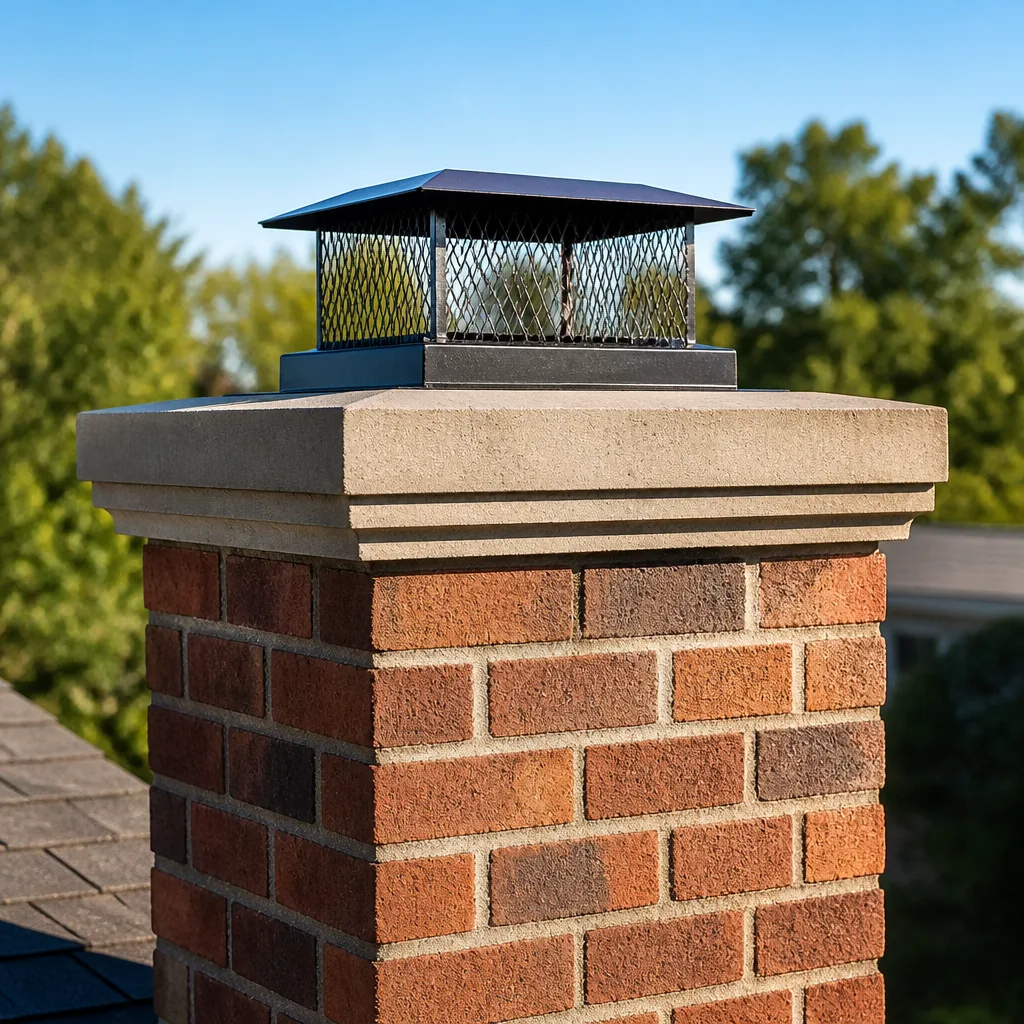
- The cap. Look for rust, cracks, animal nests, or a cap that’s come loose from the flue. A failed cap is the most common preventable cause of water damage we see. If it’s missing or damaged, that’s the first call.
- The crown. The concrete cap on top of the chimney should slope away from the flue and be free of cracks. A cracked or flat crown holds water and feeds it straight into the masonry below.
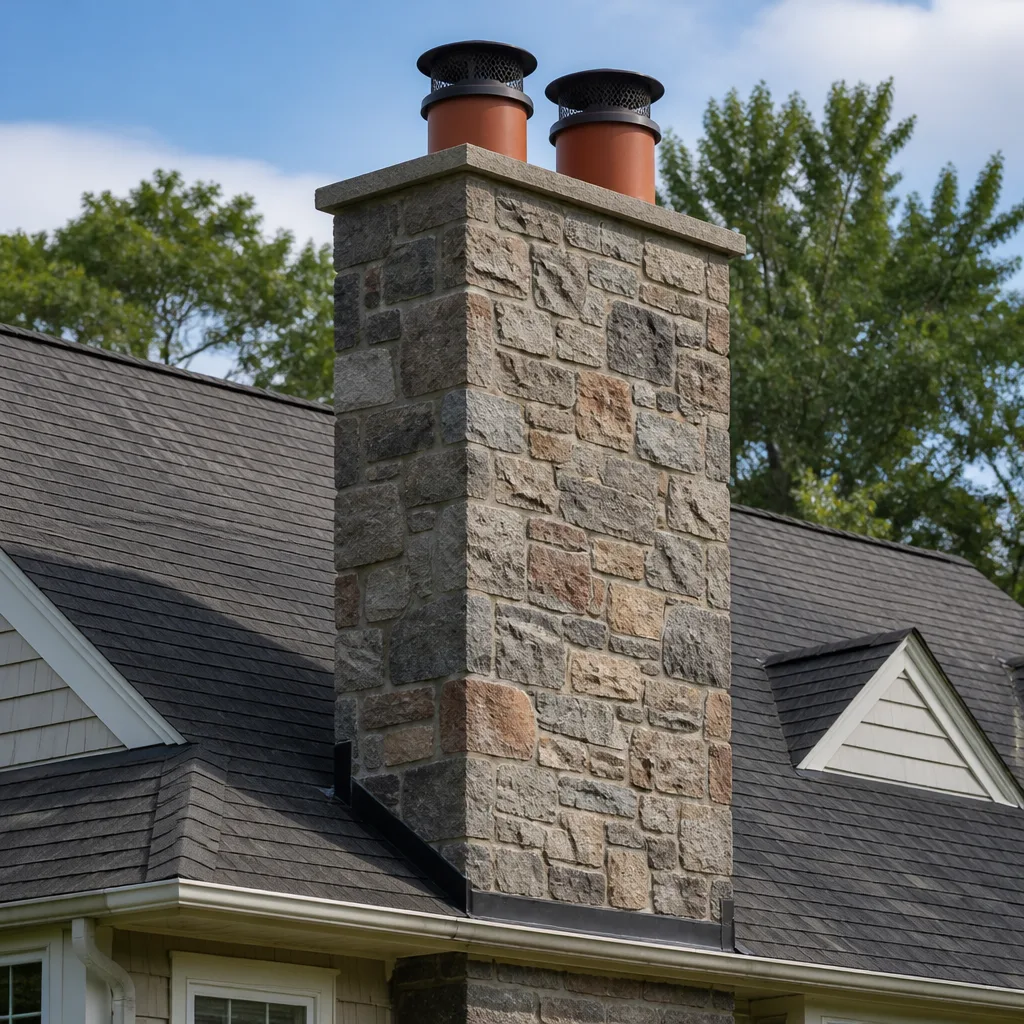
- The brick and mortar. Look for white staining, crumbling joints, or brick faces that have flaked off. Spalling brick is what water damage looks like at the exterior. It’s a repair indicator, not just a cosmetic issue.
- Exterior staining. Dark streaks below the crown or on the chimney face usually mean water is getting past the cap or crown. Streaks near the top are usually cap-related. Streaks on the lower half of the chimney can point to a flashing problem at the roofline, which is a different repair.
- The flashing and roof junction. Where the chimney meets the roof, the metal flashing should be tight and free of obvious gaps or rust-through. This is where a large share of interior water leaks actually start.
- The firebox interior. From inside the house with the damper open, a flashlight into the firebox and up the flue shows obvious heavy buildup, obstructions, or fresh cracks in the firebox panels. Note what you see and bring it to the inspection.
The one thing you can’t judge from the ground is whether the flue liner is intact along its full length. That requires a camera and training to interpret. Ground checks tell you whether something is off. A certified sweep tells you what it means. If any of the above shows up between inspections, treat it as an early call: an inspection now is almost always cheaper than a repair in March.
What the Firebox Tells You After the First Three Burns
The first three burns of the season are the closest thing a chimney has to a health check. A chimney that drafts well, burns clean, and shows no unusual buildup is generally healthy going into the season. One that doesn’t is telling you something before the problem gets expensive. We ask Springfield homeowners to look for a specific set of signs after those first three fires.
Check for these after each of the first three burns, and note what you see:
- Smoke rolling back into the room at startup or on reloads. This is a draft problem. It can be as simple as a cold flue needing warming or as serious as a partial obstruction. Either way, it warrants a call.
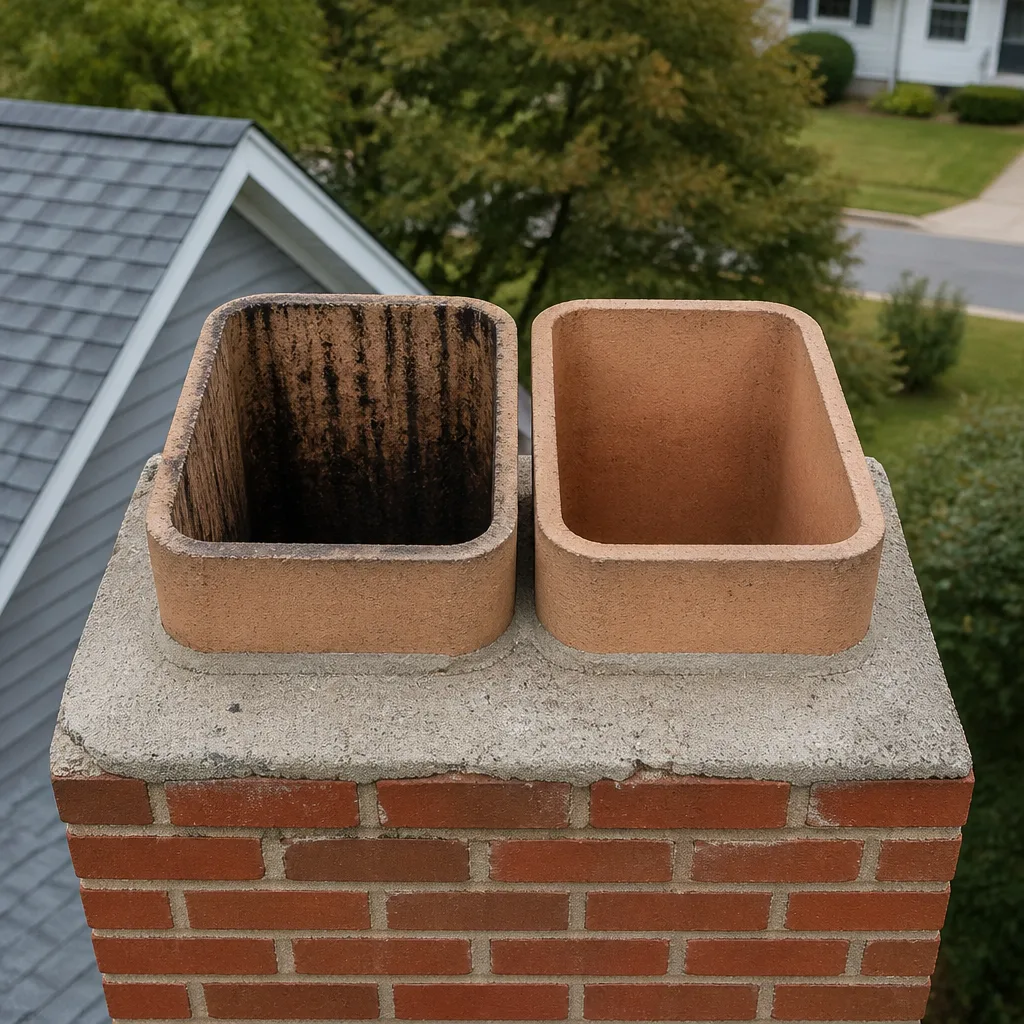
- Creosote on the firebox walls or damper frame. Light, sooty dust is normal. Glossy, tar-like buildup or flaky black crusts are not. That’s creosote forming faster than it should and it’s the reason for a mid-season sweep.
- Visible cracks in firebox panels or mortar joints. Hairline cracks in firebrick mortar can widen quickly with heat cycles. Cracks in the firebox itself are a safety issue and need a professional look.
- A strong smoke smell in the house after the fire goes out. This is usually a draft reversal or a blocked flue. Persistent smoke odor between burns means air is moving the wrong way.
- Uneven burning or a fire that won’t stay lit. A chimney pulling poorly will smother the fire. That’s either a draft issue or a blockage, and both need eyes on the flue.
- Debris in the firebox that you didn’t put there. Bits of mortar, twigs, or nesting material are a signal that something is going on above.
Any one of these doesn’t automatically mean a repair. It means the chimney is due for a professional inspection sooner than the annual visit. The difference between booking now and waiting is that a small issue caught after the first three burns is usually a cleaning and a fix. The same issue caught in January can be a liner replacement. If the first three burns are clean and the draft is strong, you’re logging “healthy” and continuing the calendar.
How to Log Chimney Condition Year Over Year
A chimney log doesn’t need to be complicated. A page in a notebook or a note in your phone is enough. What matters is that the record is consistent: same categories, same season, same eye. That’s what turns a stack of observations into a trend line you can show a sweep.
Here’s the format we recommend. Write these down each year, with the date, after your ground check and after the inspection:
- Cap condition: intact / loose / missing / rusted. Note whether anything has changed since last year.
- Crown condition: sound / hairline cracks / significant cracks. Sketch or photograph the crown from the same vantage point each year so changes are visible in side-by-side photos.
- Exterior masonry: note new spalling, white staining, or crumbling joints, and which side of the chimney they’re on.
- Flue and firebox notes: what the sweep found – creosote level, liner condition, any cracks or gaps – in your own words, plus the sweep’s written report.
- Draft and burn notes: how the season’s first burns went. Draft strong, smoke rollback, cold flue, etc.
- Work performed: what was done that year, from sweeping to a cap replacement. Include the brand and model of any component installed.
- Recommendations for next year: what the sweep said to watch.
Photographs are the single most useful part of the log. A photo of the crown from the same angle each spring will show a crack widening in a way that notes alone never will. A photo of the cap will tell you whether the rust is stable or advancing. A photo of the firebox after each inspection shows whether the buildup pattern is consistent.
When you carry a few years of this forward, the question “does my chimney need a repair?” gets much easier to answer honestly. If three springs of photos show the crown stable and the mortar tight, you’re maintaining. If one spring shows new spalling where there was none, you know the timeline and you can plan the work. This is also how we scope larger jobs: a homeowner who can tell us the crown has been stable for three years and then cracked last winter is starting from a much clearer picture. Bring the log to your inspection and we’ll add to it.
DIY-Safe Maintenance vs. What Needs a Certified Sweep
The single most common mistake we see is homeowners treating the whole chimney as a DIY job or treating the whole chimney as a professional-only job. Neither is right. There’s a real line between the tasks that are safe to do yourself and the tasks where the risk isn’t worth taking. In a Springfield winter, that line matters more than most people realize.
Here’s how we draw it:
Genuinely DIY-safe:
- Ground-level visual checks with binoculars and a flashlight (the routine covered above).
- Clearing obvious debris from the firebox and hearth before the first burn.
- Checking the damper open and closes fully.
- Reading and keeping the written inspection report and sweep photos.
- Photographing the cap, crown, and masonry each season for the log.
Needs a certified sweep:
- Cleaning creosote beyond light soot. Creosote is flammable, and a chimney fire is a fast, dangerous event. Don’t scrape at it yourself.
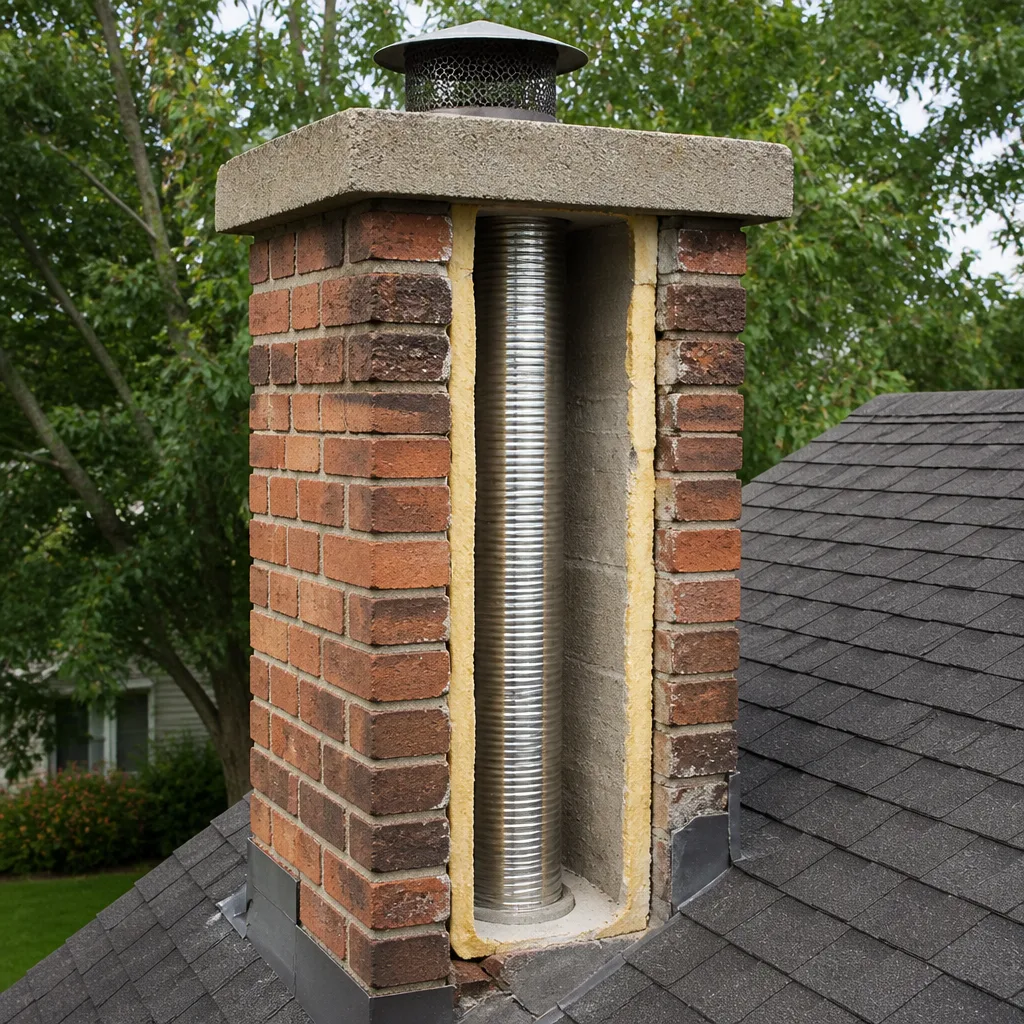
- Assessing the full length of the flue liner. A camera inspection shows what the eye can’t, and interpreting liner condition takes training.
- Any work inside the flue path itself, including liner installation and flue resurfacing.
- Repairs to the crown, mortar, flashing, or firebox.
- Anything requiring a ladder to reach the top of the chimney.
- Any check where the firebox shows cracked panels, heavy creosote, or persistent smoke rollback.
The rule of thumb: if the task involves the firebox interior, the flue, or the roof, it’s professional work. If it involves looking, photographing, and writing things down, it’s yours. Our technicians have up to 9 years of experience, and the reason to bring them in on liner questions is that the wrong answer is expensive. We use professional-grade product lines on this work – DuraFlex liners where flue configurations need flexibility, and HeatShield resurfacing to restore a deteriorated flue without a full liner replacement when damage is caught early. Those options exist because a trained eye can see which one fits.
When to Book a Chimney Sweep in Springfield
The best time to book a sweep in Springfield is early autumn, before burning season starts. Early fall gives you time to fix anything the inspection finds without losing burn time. September and early October fill up fastest. Late winter into spring is the other good window, especially if the winter log shows drift: spring inspections catch what winter did, and spring repairs happen in the same season, before the fall rush.
These are the triggers that should move the appointment forward, even off-schedule:
- Any of the firebox signals after the first three burns of the season.
- Visible damage to the cap or crown on the ground check.
- New staining on the chimney exterior or the ceiling around the chimney.
- A smoke smell inside the house after burns, or smoke rolling into the room.
- It’s been more than a year since the last professional inspection.
A proper visit includes sweeping, a camera inspection, and a photo report you can see for yourself. You should never be told you need a liner or a resurfacing job without being shown the evidence. That’s the standard we hold ourselves to: a chimney sweep in Springfield should hand you a report, not a sales pitch. Prices are set by written estimate per job, and the estimate is free.
Book the sweep before you need it. A September visit is a routine job. The same call in mid-January is a decision made under pressure, and that’s the wrong time to make it.
Common Mistakes to Avoid
A checklist only works if the mistakes on the other side of it are just as clear. These are the ones we see most often in Springfield homes, roughly in order of how much they cost to undo:
- Wait a year because the fire “worked fine.” A chimney can draft fine with a cracked flue tile or a failing crown. The first warning is often the damage, and by then the cost is up. Get the annual inspection even when the fire behaves.
- Skip the cap check. The cap is the cheapest, easiest thing on this list and the single most common preventable cause of chimney damage we see in Springfield. Check it every season, not just when there’s a problem.
- Treat creosote as normal. A little soot is normal. Glossy, tar-like creosote is not, and it’s a fire risk. If the first three burns leave more than soot, book a sweep now.
- Lump the chimney in with other contractor work. A generalist with a brush can sweep a flue. They usually can’t assess a liner, spec a DuraFlex or Olympia Chimney installation, or resurface a flue with HeatShield. Chimney work goes to a chimney specialist.
- Do the flue cleaning yourself when it’s beyond light soot. Creosote is flammable and the flue is a confined space. A chimney fire is not a small event. Leave the flue to a trained professional.
- Skip the written log. Without notes, every year’s condition starts from scratch and you can’t see drift until the damage is visible. The log is what makes the rest of the checklist useful.
- Book so late in the year there’s no repair window. If the inspection finds a crown crack in December in Springfield, you’re doing the repair in the worst conditions of the year. Spring inspections avoid that entirely.
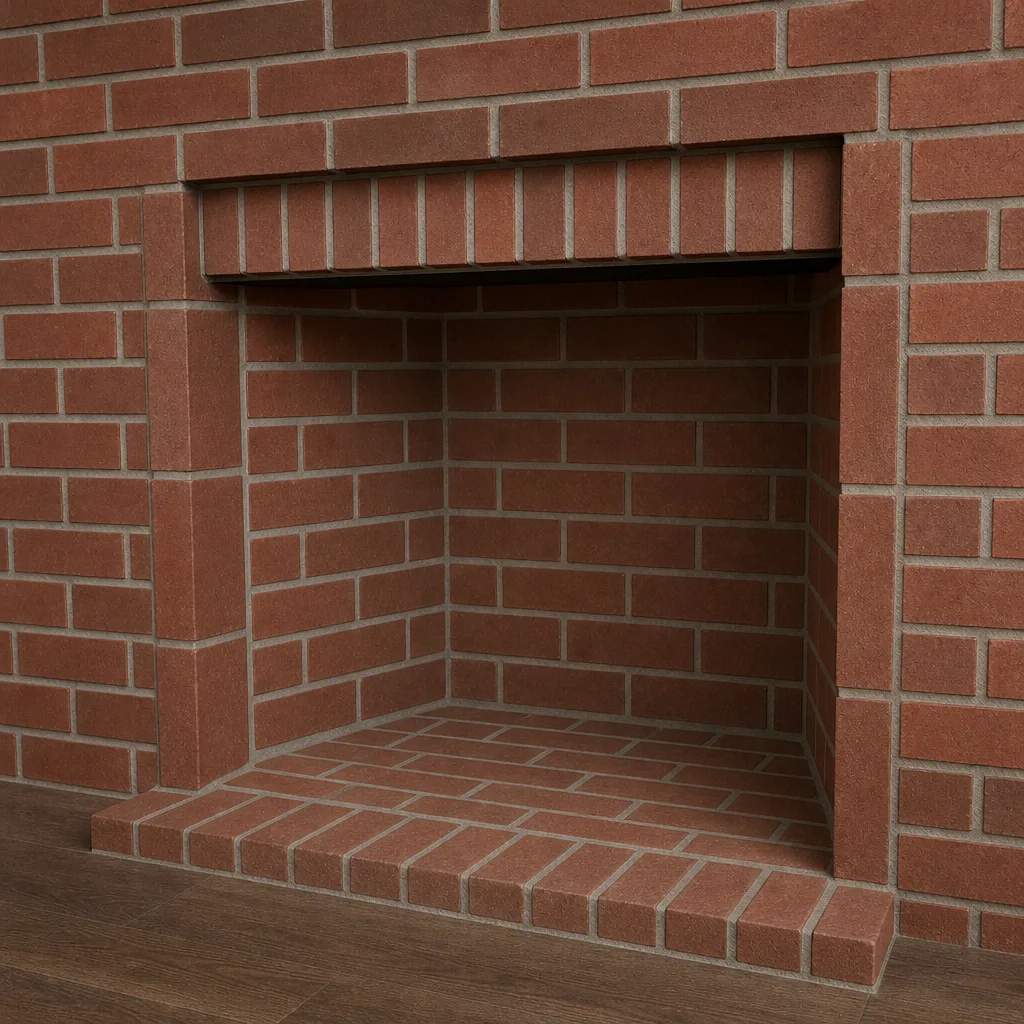
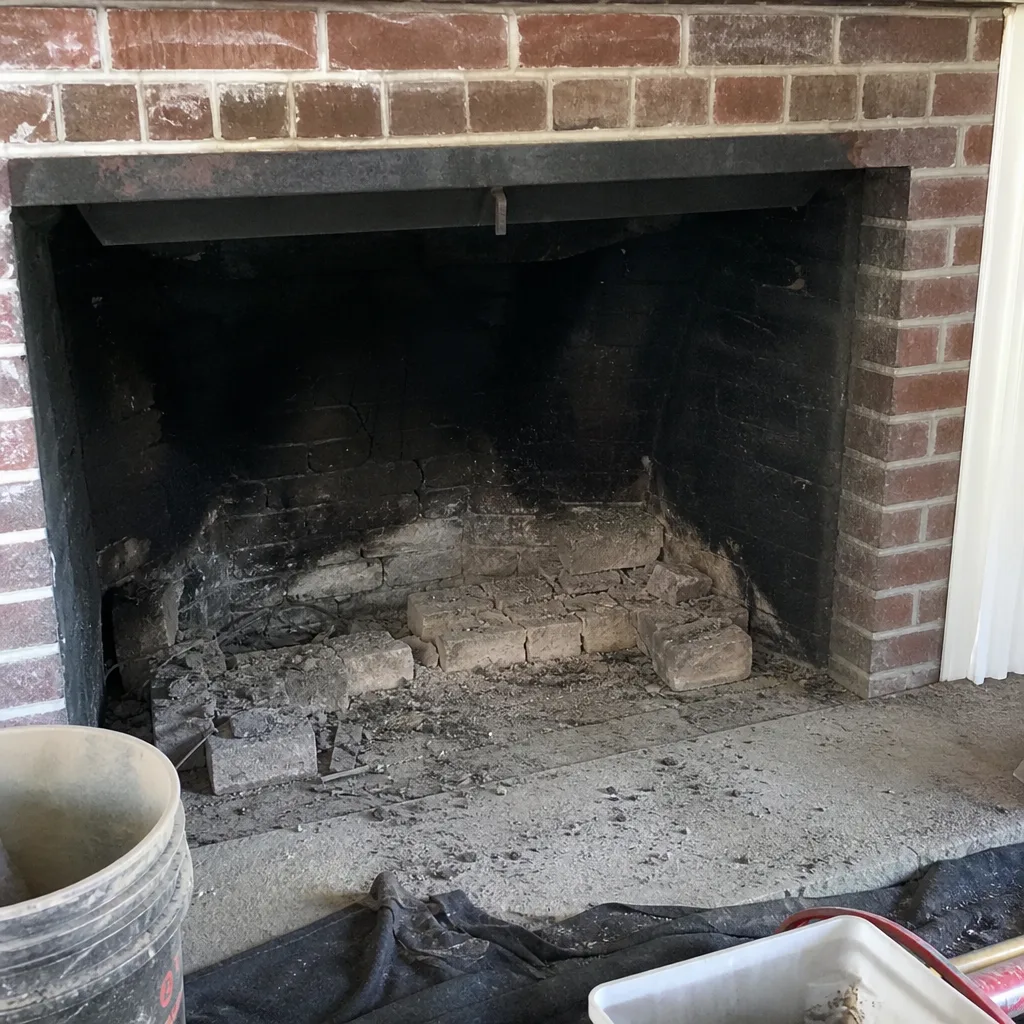
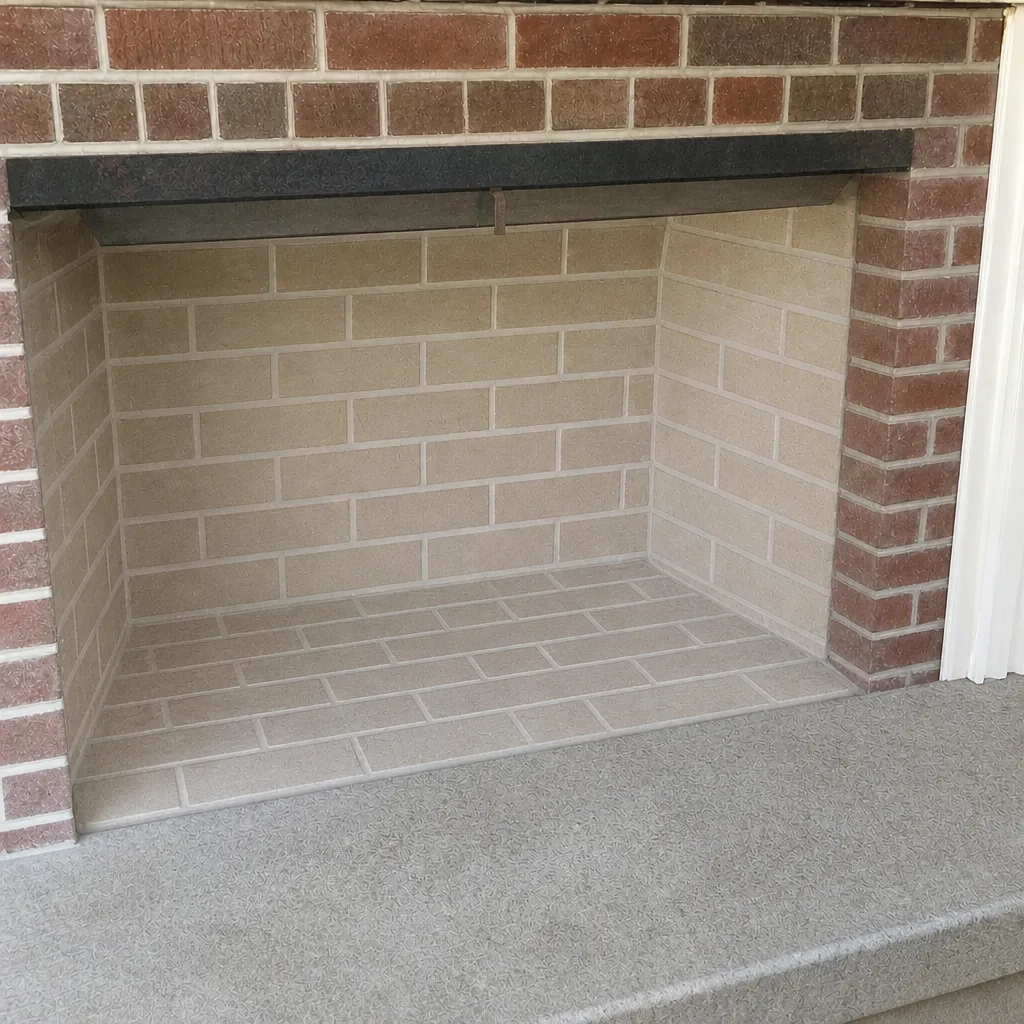
See the difference
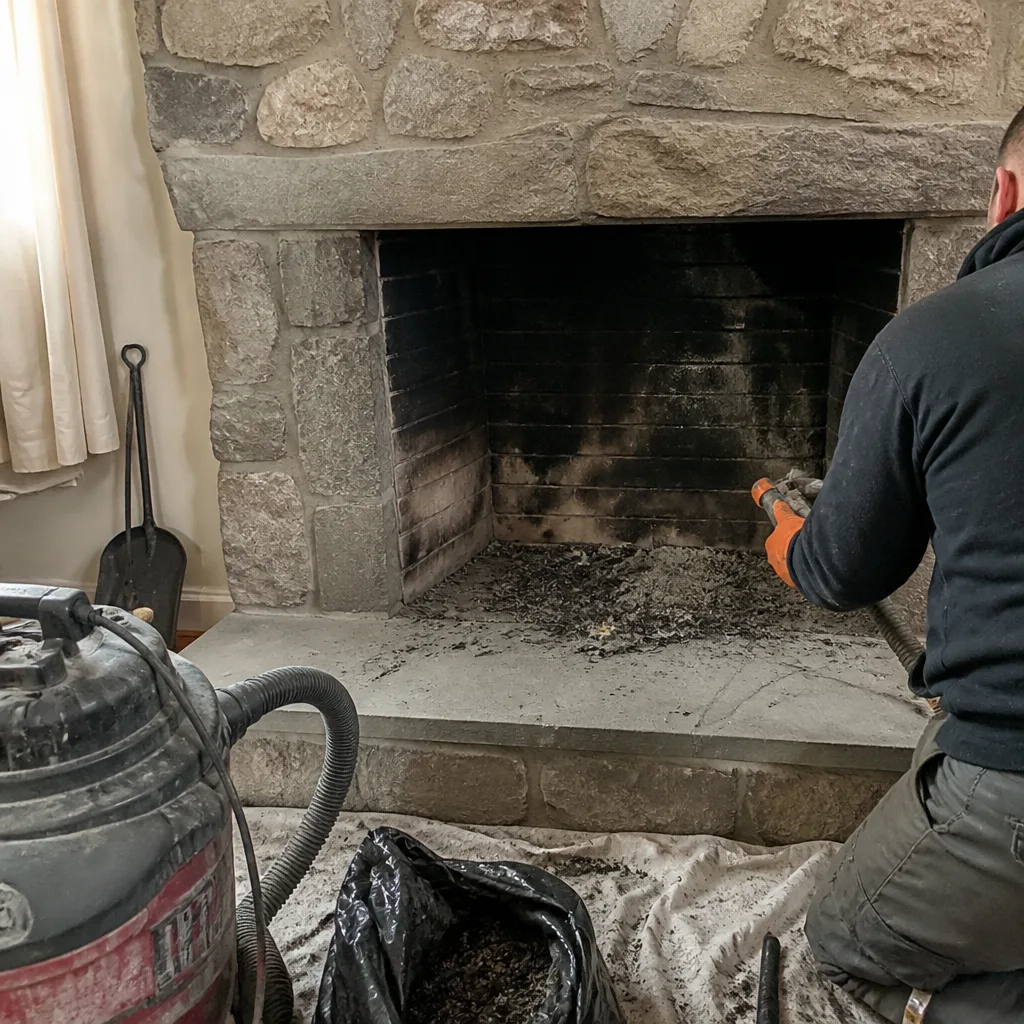 Before
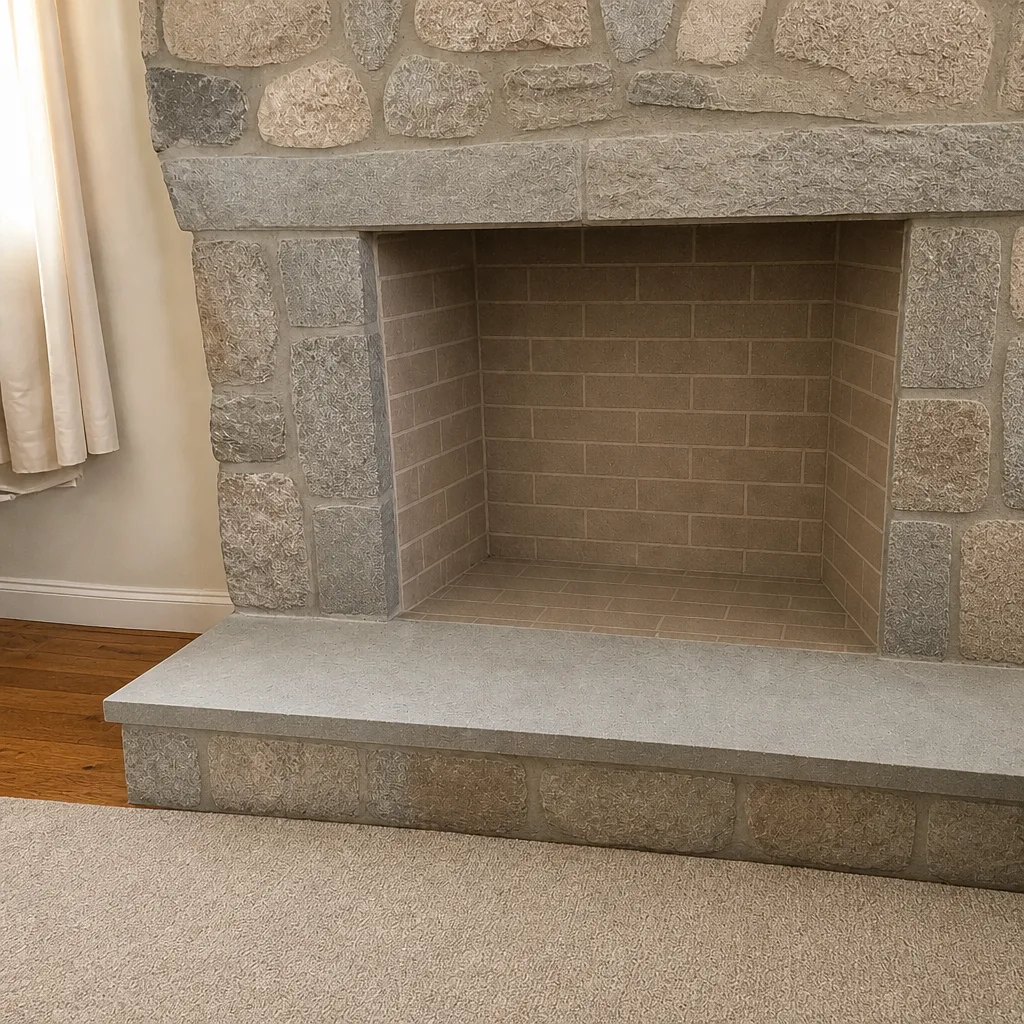 After
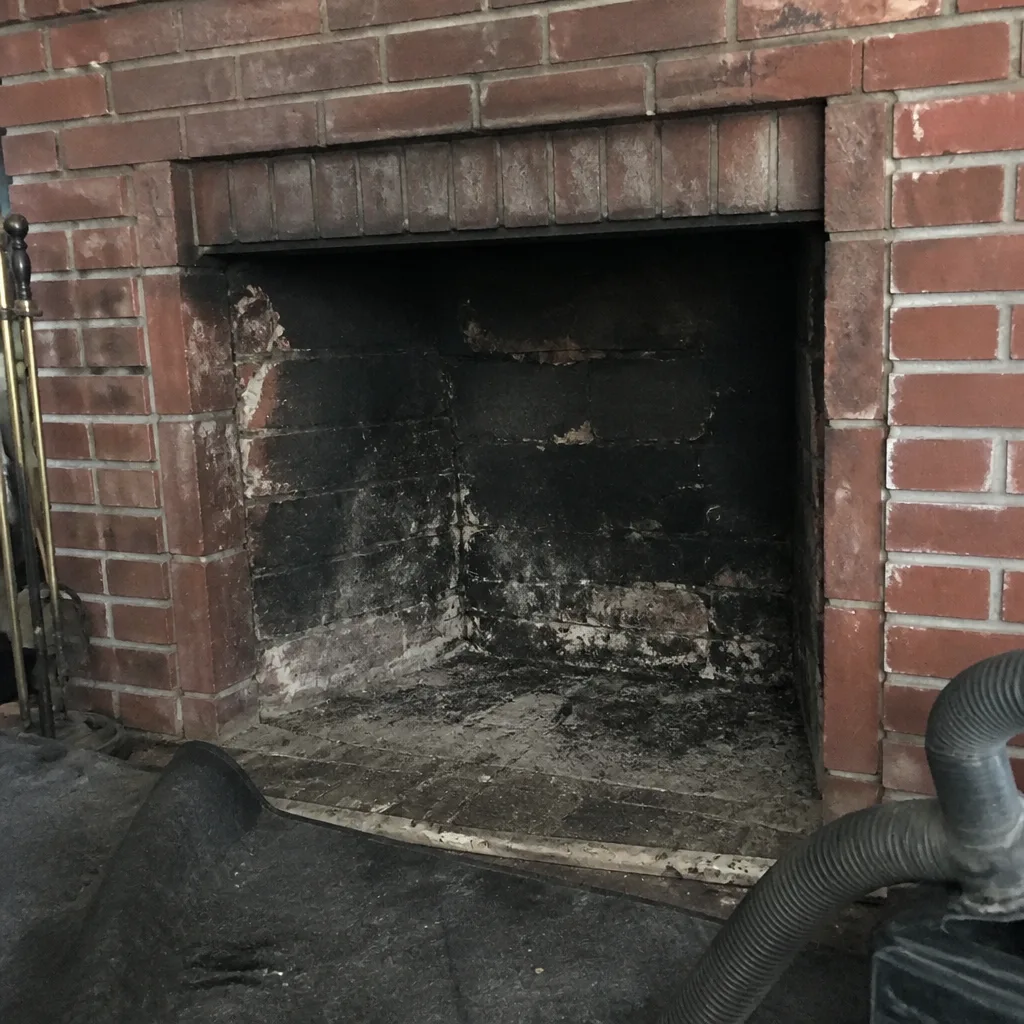 Before
 After
 Before
 After
When to Call a Professional
Some signs need a sweep, not a note in the log. Call a professional if the firebox shows cracks in the panels or mortar joints, if you see heavy black or glossy creosote, if smoke rolls into the room at startup, if you smell smoke inside the house after the fire’s out, or if the ground check shows a damaged cap, a cracked crown, or new staining on the exterior masonry. Call immediately if you suspect a chimney fire may have occurred, even a small one; the flue liner needs assessment before you burn again. If you’re not sure, err toward the call. A chimney sweep visit in Springfield is a routine, low-cost way to confirm whether your chimney is fine, and the inspection photos let you see the answer for yourself.
Lockhart Chimney Sweep offers free estimates in Springfield – call (855) 360-8122. We answer 24/7. Fast dispatch from 7am to 7pm.
Frequently Asked Questions
Chimney sweep pricing is set per job by a written estimate after the sweep sees the chimney. Flue size, access, the amount of creosote, and whether a camera inspection is needed all affect the scope. The estimate itself is free, so there’s no cost to finding out what your chimney actually needs. Call (855) 360-8122 for an exact quote.
The general rule is once a year for a wood-burning chimney in regular use, with additional sweeps whenever a season of burning produces heavy creosote buildup. In Springfield, a chimney that sees regular winter fires should be swept and inspected every year, and the first three burns each fall tell you whether the buildup is on schedule. Call (855) 360-8122 for an exact quote – estimates are free.
Yes. Annual inspection is the only way to see the full length of the flue liner, which is the part you can’t safely check yourself. A camera inspection and photo report show you the condition directly, so you’re never asked to take a repair recommendation on faith. The cost of an inspection is small against the cost of a missed liner crack. Call (855) 360-8122 for an exact quote.
Creosote builds up in the flue, the crown and cap deteriorate without anyone watching, and small cracks widen through Springfield’s freeze-thaw cycles. The first sign is often a repair bill instead of a cleaning bill. Skipping a year doesn’t cause damage immediately, but three or four skipped years usually means the same chimney needs a repair the checklist would have caught when it was still small. Call (855) 360-8122 for an exact quote.
Yes – the ground-level visual checks, the firebox inspection after the first three burns, clearing debris from the hearth, checking the damper, and keeping the written log are all safe to do yourself. Anything inside the flue, on the roof, or involving creosote removal needs a certified sweep. Call (855) 360-8122 for an exact quote.
Both are real, and which one you need depends on what the camera inspection shows. HeatShield resurfacing can restore a deteriorated flue tile and is often appropriate when damage is caught early and the tile itself is still structurally sound. A full liner replacement with DuraFlex or Olympia Chimney is the option when the flue is too far gone or the configuration needs a flexible system. You shouldn’t be asked to choose without seeing the photos of your own flue. Call (855) 360-8122 for an exact quote – estimates are free.
The Bottom Line
A chimney maintenance checklist for Springfield comes down to watching, recording, and knowing the line between looking and doing. Check the cap, crown, and exterior masonry from the ground each season. Watch the first three burns of the year for smoke rollback, heavy creosote, and firebox cracks. Book the professional inspection and sweep annually, ideally in early autumn or late spring. Write down what you see, with photos, so the log shows a trend line instead of a snapshot. When the ground check flags something, or the firebox tells you cleaning is overdue, call a certified specialist. Every chimney is a system, and this checklist is a way of watching the whole system rather than hoping the fire still works.
To put this checklist to use on your own chimney, reach out to Lockhart Chimney Sweep for a free estimate. You can also read more about our chimney repair work, see our Springfield page for local details, and call (855) 360-8122 to book. We answer 24/7. Fast dispatch from 7am to 7pm, Sunday through Friday, closed Saturday.
Written by the team at Lockhart Chimney Sweep.