
Last updated November 16, 2026
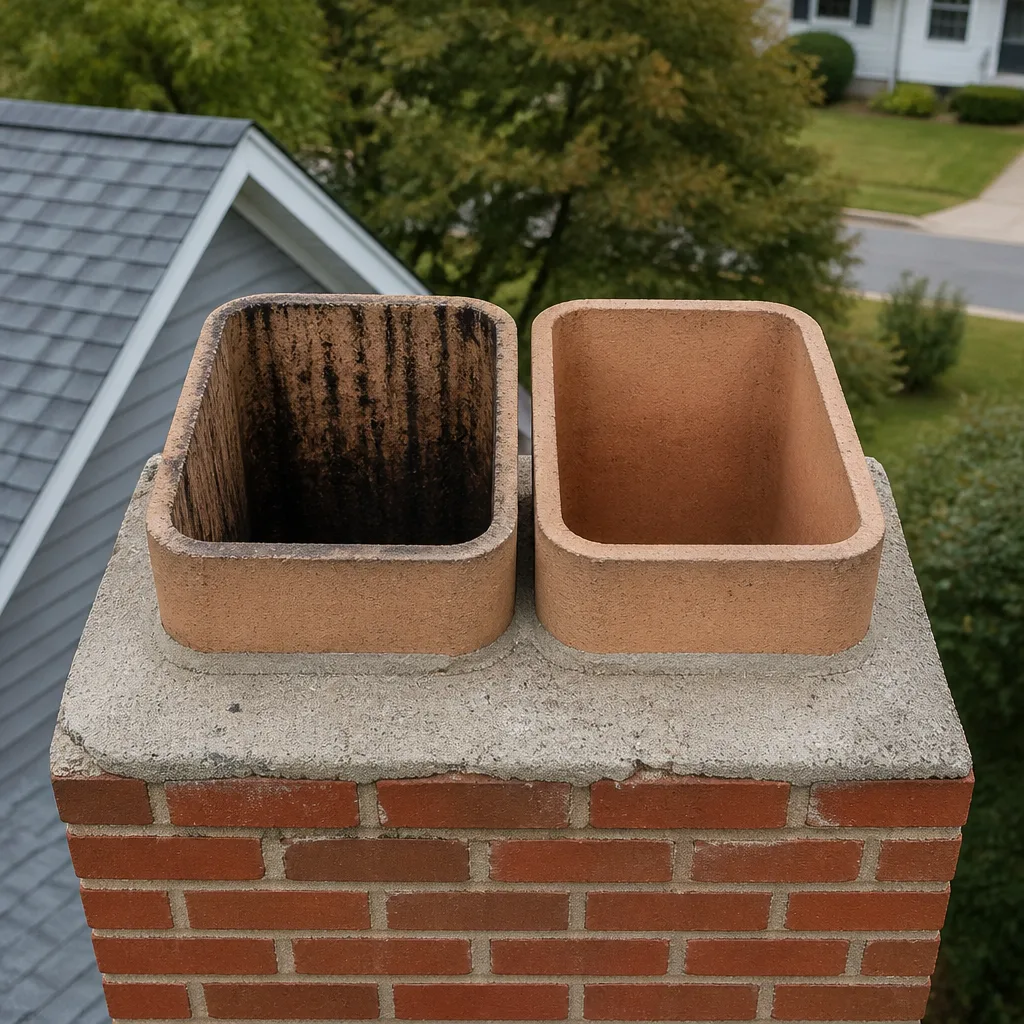 Sweep & inspection
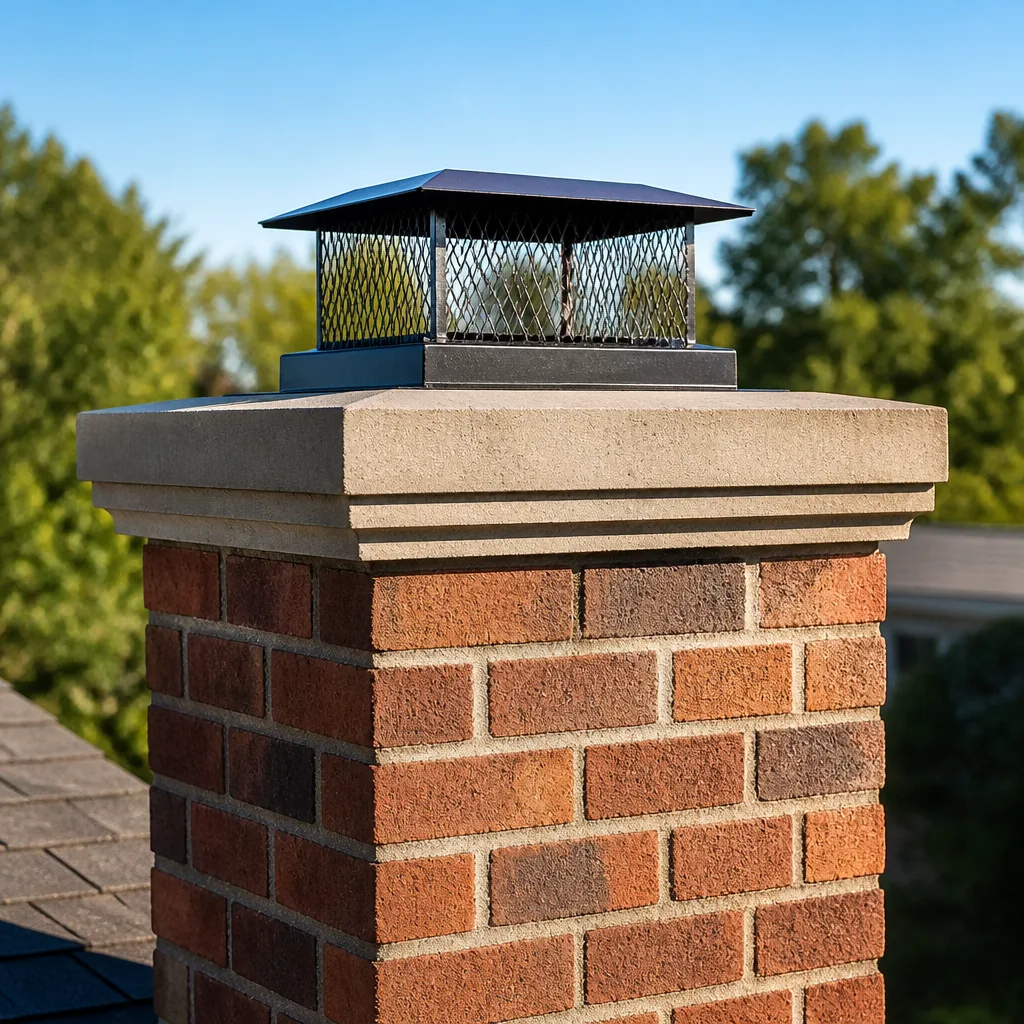 Caps & crowns
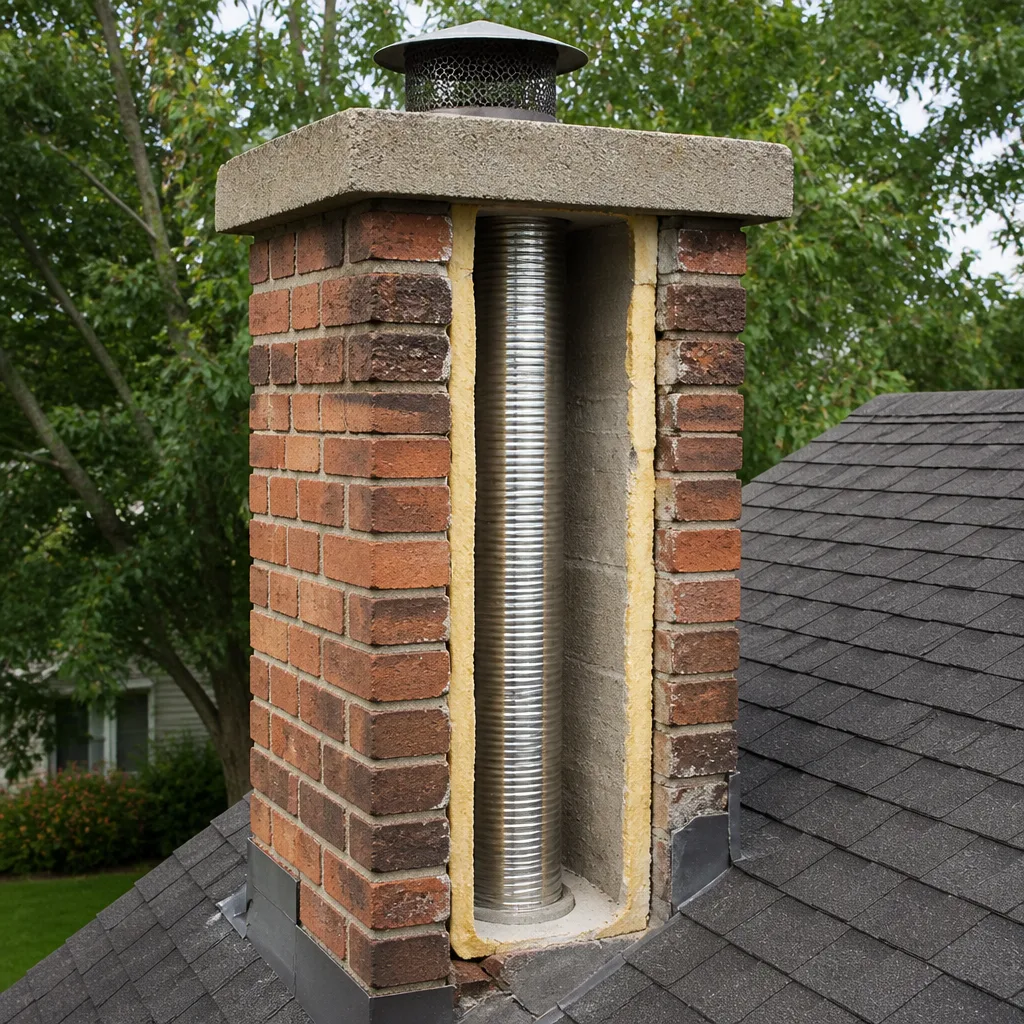 Flue relining
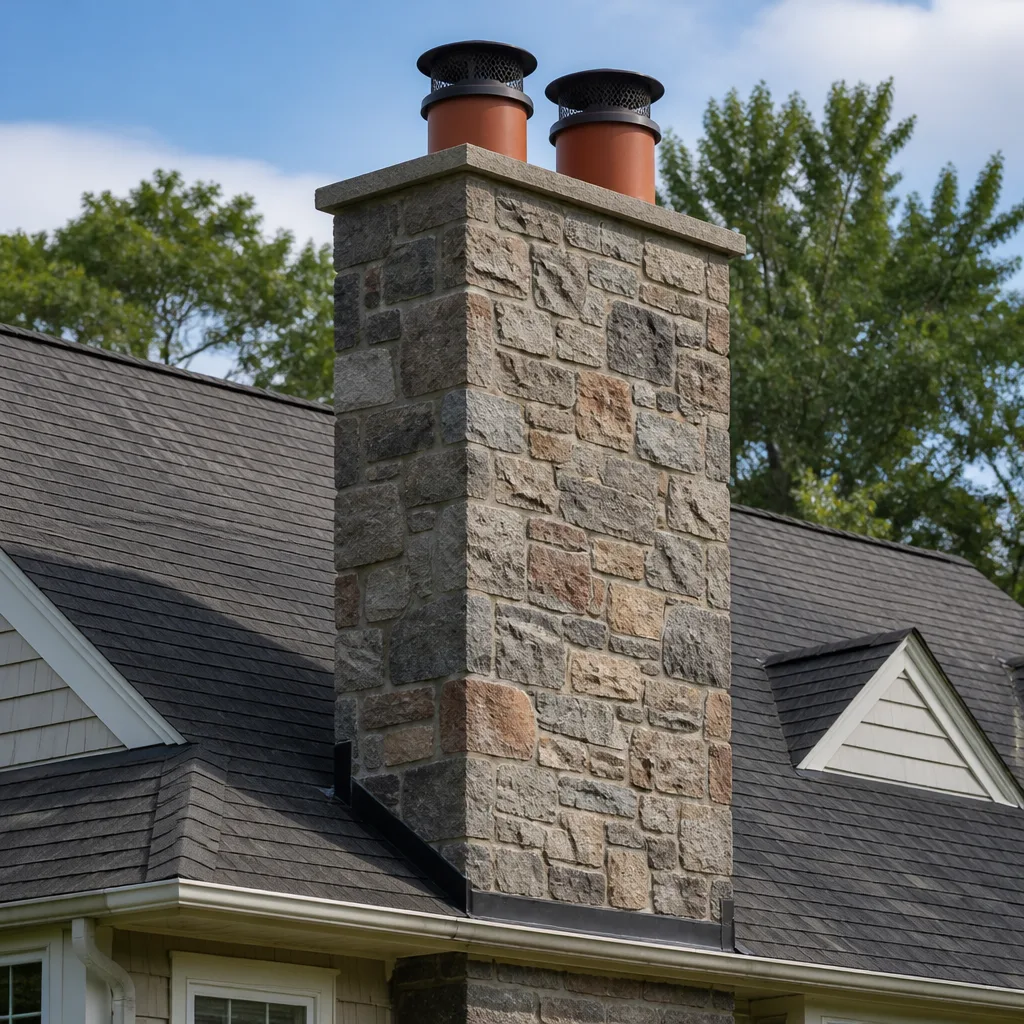 Masonry repair
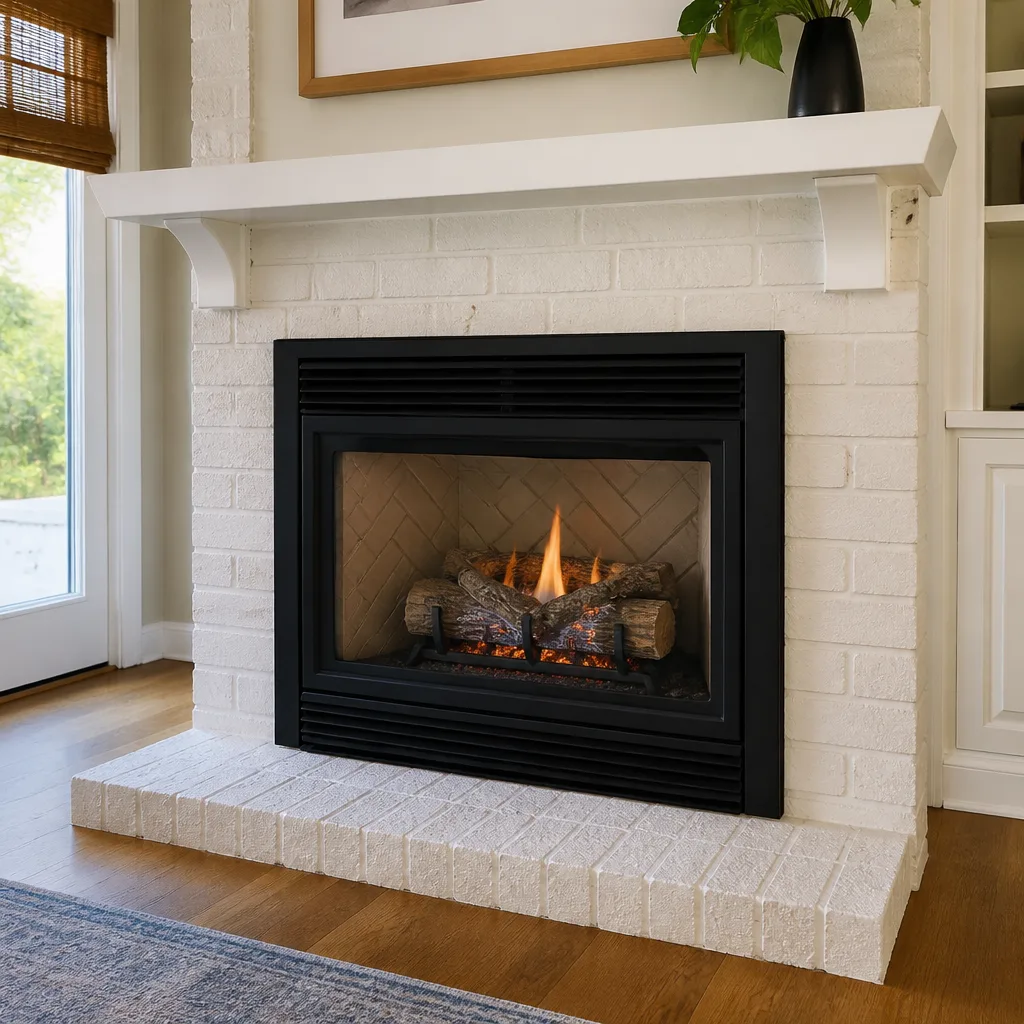 Gas fireplace service
Level 1 sweep and inspection to the NFPA 211 annual standard - flue, crown, cap, and flashing checked and photographed
Chimney sweep logs do not sweep chimneys. They loosen some creosote - which then falls where a brush and vacuum still have to collect it.
Chimney Sweep Maintenance Schedule: What to Do and When
The chimney industry settled on “once a year” because it’s easy to remember, not because it’s calibrated to your fireplace. Burn three cords of hardwood over a Springfield winter and your flue accumulates creosote at a rate a gas-log homeowner would never see. Run six weekends of gas logs and your maintenance picture looks completely different. Those two chimneys have nothing in common, and they shouldn’t share a schedule. This guide builds a task-by-task calendar around how you actually burn: what your fuel deposits, when freeze-thaw cycles do their damage, and which months catch which problems before they compound. By the end you’ll know what to check yourself, what to book, and when.
Quick Answer
Every wood-burning chimney needs sweeping at least once a year, and more often if you burn heavily or often. Most Springfield homes do well with a professional sweep and inspection in early fall, then a spring check in May or June to catch freeze-thaw damage before the humid months set in. Gas and pellet appliances usually need annual inspection rather than annual sweeping. The real answer is use-based: measure what you burn, and let that set your interval.
Styles & brands we work with
- Sweep & inspection
- Caps & crowns
- Flue relining
- Masonry repair
- Gas fireplace service
Table of Contents
- Why “Once a Year” Isn’t the Whole Answer
- The Fuel-Type Matrix: Wood, Gas, Oil, and Pellet
- The Springfield Calendar: Month-by-Month Tasks
- Tracking Cord Consumption as a Sweep Trigger
- What the Spring Thaw Does to Masonry, and Why May Be Smarter Than September
- The Parts Outside the Flue: Cap, Crown, and Flashing
- The Homeowner’s Annual Checklist
- Monthly Checks You Can Do Yourself
Why “Once a Year” Isn’t the Whole Answer
A yearly sweep is the floor, the minimum a wood-burning chimney needs to stay safe. It’s a good rule. It’s also blunt. It treats a seasonal cabin chimney and a primary-heat fireplace the same way, and it ignores the fact that byproducts, moisture, and masonry damage all move on different clocks.
Creosote is the clearest example. Wood smoke deposits it in three general forms, and the third – glazed, hardened creosote – is the one that fuels a chimney fire. How fast you build it depends on several things: how dry your wood is, how hot your fires burn, and how much you burn overall. A household that goes through three cords in a season reaches that buildup faster than a household that burns a few evenings a month. Same chimney design, different interval.
Then there’s the moisture side. In Springfield, the shoulder seasons – late spring and early fall – tend to run damp. Masonry is porous. A chimney that stays damp in mild weather has more time for water to work its way into brick and mortar joints, freeze, thaw, and repeat. That’s a separate maintenance concern from creosote, and a once-a-year sweep booked in October won’t catch it at the right moment.
So the sensible schedule has two tracks running at once. One tracks what you burn, which sets how often the flue needs cleaning. The other tracks the seasons, which sets when to look at the outside of the chimney for water damage.
If you’re mapping out your first season with a new-to-you fireplace or wood stove, start with a Lockhart Chimney Sweep inspection so you know what condition the system is in before you commit to an interval.
The Fuel-Type Matrix: Wood, Gas, Oil, and Pellet
Different fuels leave different deposits, and those deposits get dangerous at different speeds. Here’s how the four common fuel types compare in central Massachusetts homes.
Wood
Wood is the highest-maintenance fuel and the one that most needs a real schedule. It produces creosote and soot, both of which build up in the flue. Heavy use means more buildup. The rule of thumb: sweep annually at minimum, and more often if you burn more than a cord or two a season, or if you notice reduced draft or a strong smoky smell.
Gas
Gas burns cleanly and produces very little of what you’d recognize as creosote. A gas fireplace or insert generally doesn’t need annual sweeping. It does need an annual inspection – gas appliances can develop issues in the venting, the burner, or the connections that a visual check catches. Carbon monoxide is the reason gas deserves attention, not soot.
Oil
Oil-fired appliances leave soot and sulfur residue, and the venting needs periodic cleaning. Oil systems are often tied to heating equipment rather than a fireplace, and their service intervals align with that equipment’s annual tune-up.
Pellet
Pellet stoves produce ash and some fly ash that collects in the vent. Routine ash removal is a homeowner task; the venting itself needs professional attention on a regular basis, since ash can clog a vent over time. The interval depends on how much you burn, similar to wood but generally less creosote-intensive.
Comparison at a glance
- Wood – annual sweep minimum; more often if heavy use. Highest creosote risk.
- Gas – annual inspection; sweeping rarely required. Watch for venting and CO issues.
- Oil – periodic vent cleaning; tie to equipment service.
- Pellet – regular professional vent cleaning; ash is the main buildup.
Know your fuel, and you know roughly how often to book. When you do book, a chimney sweep should include a look at the whole system, not just a brush down the flue.
The Springfield Calendar: Month-by-Month Tasks
A maintenance schedule works best when it’s tied to the seasons. Here’s the general rhythm we’d suggest for a wood-burning fireplace in Springfield, with the reasoning behind each window.
- September / early October – pre-season sweep and inspection. Before you light the first fire, get the flue cleaned and inspected. This is the “before burning season” booking, and it’s when you want to know if anything needs repair before cold weather sets in.
- October – cap and crown check. Before the leaves fall and the first hard frost hits, confirm the chimney cap is intact and the crown is sound. A missing or damaged cap lets water and animals in all winter.
- December / January – a mid-season look at your wood supply. Check that stored firewood is dry and covered. Wet wood builds creosote faster.
- March – a post-season sweep if you burned heavily. After a long season of frequent fires, a spring sweep resets the flue before the damp months.
- May / June – moisture and freeze-thaw inspection. After winter freeze-thaw cycles, spring is the moment to look for cracked masonry, loose mortar, and water intrusion.
- July – repair window. If the spring inspection found masonry or flue issues, warm, dry summer weather is often the best time to schedule repair work.
- August – pre-season planning. Book the fall sweep early. This is also when to confirm caps are seated and screens are in place before fall storms.
This calendar isn’t fixed in stone. A household that burns heavily might add a second sweep. A gas-log-only home can trim the list to inspections. The point is that there’s a task for each season, not one catch-all appointment.
Tracking Cord Consumption as a Sweep Trigger
The cheapest way to know when you need a sweep is to track what you burn. A cord is a stack of firewood 4 feet high, 4 feet deep, and 8 feet long. Most homeowners know roughly how much wood they go through, even without a formal measure – they know how many stacks disappeared over the winter.
Here’s a practical way to use that number.
- Record your starting stack. At the beginning of the season, note how much wood you have. A rough count of stacks, or an estimate of a fraction of a cord, is enough.
- Record your ending stack. At the end of the season, note what’s left. The difference is what you burned.
- Use it to set the interval. Light use (under a cord) can usually follow the standard annual sweep. Moderate to heavy use – two, three, or more cords – is the signal to consider a mid-season or spring sweep in addition to the fall one.
- Note any change in fire behavior. If your fires start burning poorly, the draft gets weak, or you notice more smoke, that’s a cue to book an inspection regardless of the calendar.
Why bother? Because you don’t need to pay for an inspection every month, and you don’t want to skip one you actually needed. Tracking your burn gives you a real, input-based trigger point. If you’re unsure after a season, a chimney repair visit that includes inspection can tell you what you’re dealing with.
This is one of the most useful, and most overlooked, maintenance habits. It’s an honest number, and it costs nothing to record.
What the Spring Thaw Does to Masonry, and Why May Be Smarter Than September
Here’s a point that runs against conventional scheduling: for catching winter damage, the spring thaw is often a better inspection window than the fall.
Masonry chimneys are porous. Over a Springfield winter, water that enters brick, mortar joints, and the crown expands when it freezes and contracts when it thaws. Repeat that cycle enough times and joints crack, spalling brick chips off, and the crown develops cracks. None of that is necessarily visible in September, because the damage is fresh from the winter that just passed.
By May, the winter’s damage has happened and settled. A spring inspection sees the results of the whole freeze-thaw season. A September inspection, by contrast, sees the chimney after a summer of repairs or neglect and just before another winter – which is fine for pre-season safety, but not the ideal moment for detecting the previous winter’s wear.
So we’d suggest two looks: a functional sweep and inspection in the fall for safety, and a structural and moisture inspection in the spring. The spring one is where you catch the cracked crown, the crumbling mortar joint, the flashing that pulled loose, the water staining that hints at trouble behind the masonry.
The bonus: if May reveals repairs are needed, you can schedule them in the summer months when the weather supports masonry work. In our experience, catching water damage in spring and fixing it before the humid months lets you keep a problem from compounding. That’s why May, not September, is often the smarter inspection month in Springfield.
The Parts Outside the Flue: Cap, Crown, and Flashing
The flue gets all the attention, but a chimney’s long-term health comes down to the parts most homeowners never look at. Four items, checked each year.
- The chimney cap. The cap – the cover at the top of the flue – keeps out water, animals, and debris. Caps come in different styles; some are simple mesh screens, others are full enclosure caps. We work with Gelco, Famco, and Copperfield caps when a replacement or upgrade is needed. A cap that’s missing or damaged is one of the most common causes of water problems.
- The crown. The crown is the sloped top of the masonry that sheds water away from the chimney. Cracks let water seep in. A crown in poor shape is a leading reason for moisture in masonry.
- Flashing. Flashing is the metal that seals the joint where the chimney meets the roof. If it pulls loose or rusts through, water finds a path in at the roofline.
- The liner. The liner is the flue’s inner wall, and its material matters for the schedule. A clay-tile flue may crack over time; a properly installed flexible stainless liner – like DuraFlex, which handles offset and non-standard flue paths – has a different lifespan and service profile. Ask what your liner is, because it changes how you plan.
A cap and crown in sound condition do more for a chimney than almost anything else a homeowner can maintain. The check is quick, and it belongs in every annual visit.
The Homeowner’s Annual Checklist
Here’s a checklist you can print and use. It separates the tasks a professional handles from the ones you can legitimately do yourself.
Professional tasks (annual, or use-based):
- Sweep the flue – annually for wood, based on use.
- Inspect the flue, firebox, and liner.
- Inspect the cap, crown, and flashing.
- Check the damper and smoke chamber (and resurface the smoke chamber with HeatShield if it’s deteriorated).
- Assess the masonry and mortar joints for damage or water intrusion.
Homeowner tasks (monthly or as needed):
- Confirm the chimney cap and screen are in place and undamaged.
- Check that stored firewood is dry, stacked off the ground, and covered.
- Keep a working smoke alarm and carbon monoxide alarm in the home.
- Note any change in draft, smoke, or ash odor.
- Record your final cord count for the season.
One safety note the checklist can’t cover: if you ever hear a loud roar from the chimney, see glowing or cracked tiles, or smell a strong acrid odor after a fire, treat it as a possible chimney fire and call for a professional inspection before burning again. Those are situations that need trained eyes, not a visual look from the ground.
An inspection isn’t the same as a sweep. The inspection is what tells you whether you need a clean flue, a repair, or a resurfacing. In our experience, most homeowners aren’t sure which they need, and that’s exactly what an inspection settles.
Monthly Checks You Can Do Yourself
You don’t need a professional visit every month, but a few simple checks go a long way toward catching problems early. None involve getting on the roof, and none require tools beyond your eyes.
- Look at the cap from the ground. A pair of binoculars makes this easy. You’re looking for a cap that’s present, seated, and intact.
- Notice draft. Light a small fire or, if you have a gas insert, run it. If the fire draws poorly or smoke rolls into the room, note it and call.
- Listen after a fire. A loud roaring sound or a persistent smell of creosote are both worth a call.
- Check the firewood. Dry, covered storage slows creosote buildup. Keep it stacked and protected from rain.
- Keep alarms tested. A smoke alarm and a carbon monoxide alarm, both tested monthly, are part of chimney maintenance as much as any sweep.
These checks take minutes. They also give you real information to share with a professional – which makes the annual visit more useful.
Common Mistakes to Avoid
- Treating a sweep as a fall-only ritual. The fall sweep keeps you safe for burning season, but it won’t catch winter damage until the following fall. A spring moisture check catches it sooner, which matters in Springfield’s damp shoulder seasons.
- Assuming all fuels are equal. A gas-log fireplace and a wood-burning fireplace need different maintenance. Holding them to the same annual sweep schedule is a mismatch.
- Burning wet or unseasoned wood. Wet wood produces more creosote than dry wood. Drying and covering your supply is one of the cheapest maintenance habits there is.
- Ignoring the cap and crown. The parts outside the flue are where water gets in. Overlooking them is a leading cause of masonry damage.
- Skipping the professional inspection because the fire still burns. A fire burning “fine” doesn’t mean the flue or the smoke chamber is sound. Inspection is the only way to know.
- Leaving a liner question unasked. If the flue has deterioration, a resurfacing system such as HeatShield can sometimes restore it rather than require a full relining – but only if the damage is caught early. Leaving it isn’t a plan.
- Not recording what you burn. Without a number, you can’t tell whether once-a-year sweeping is actually enough for how you use the fireplace.
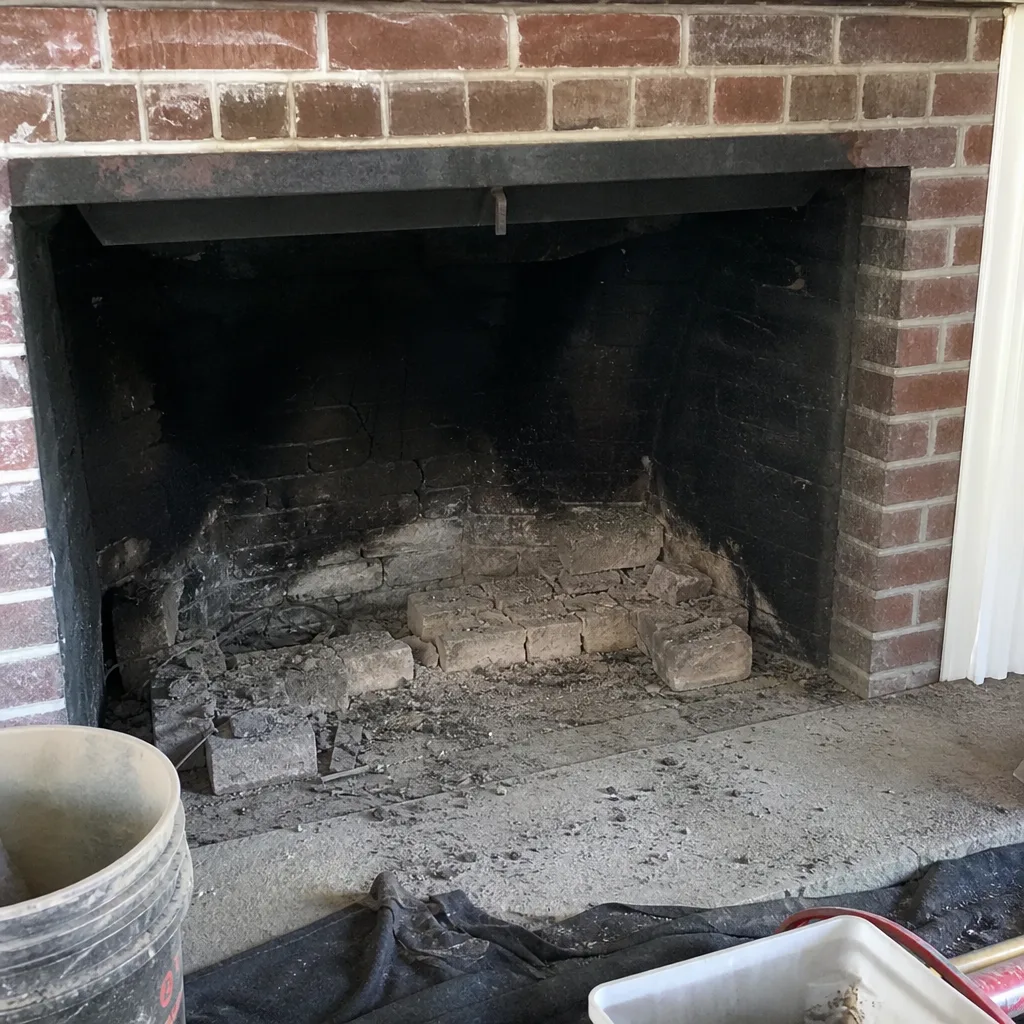
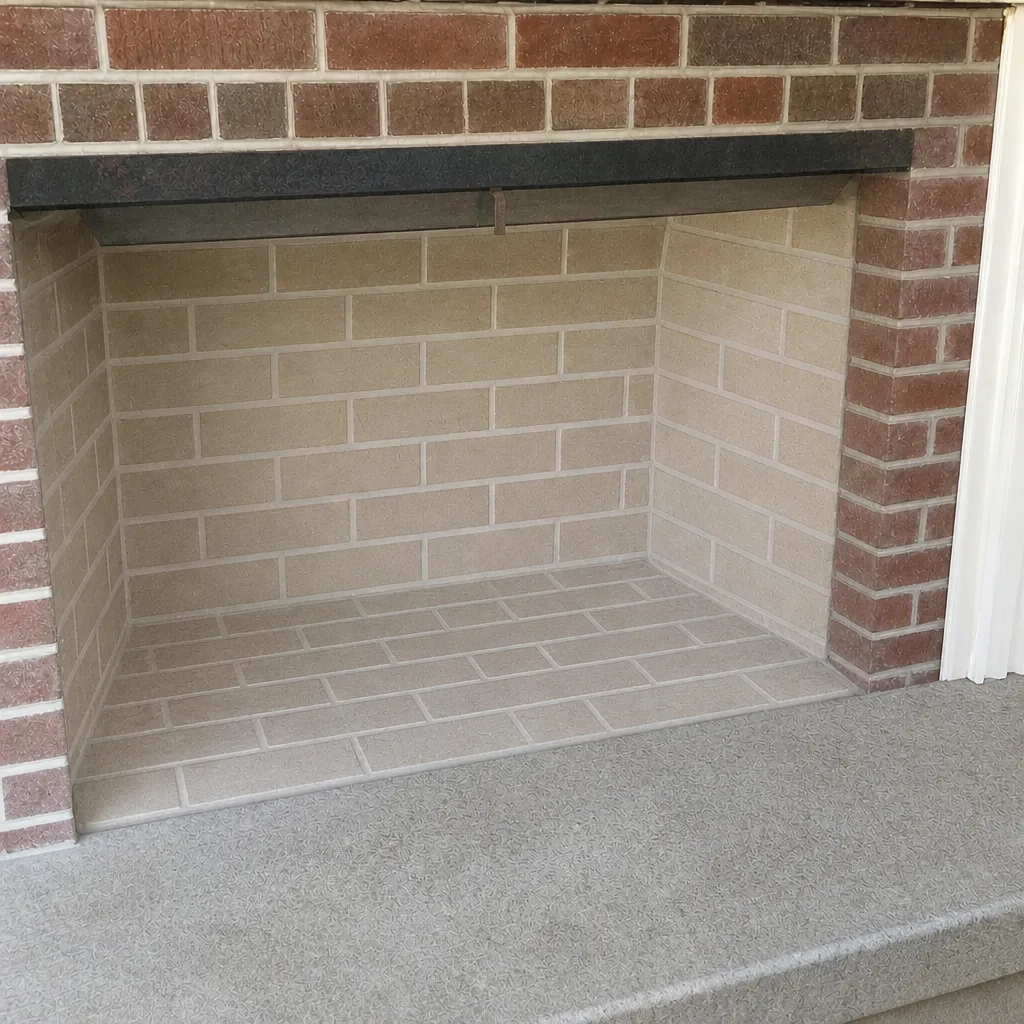
See the difference
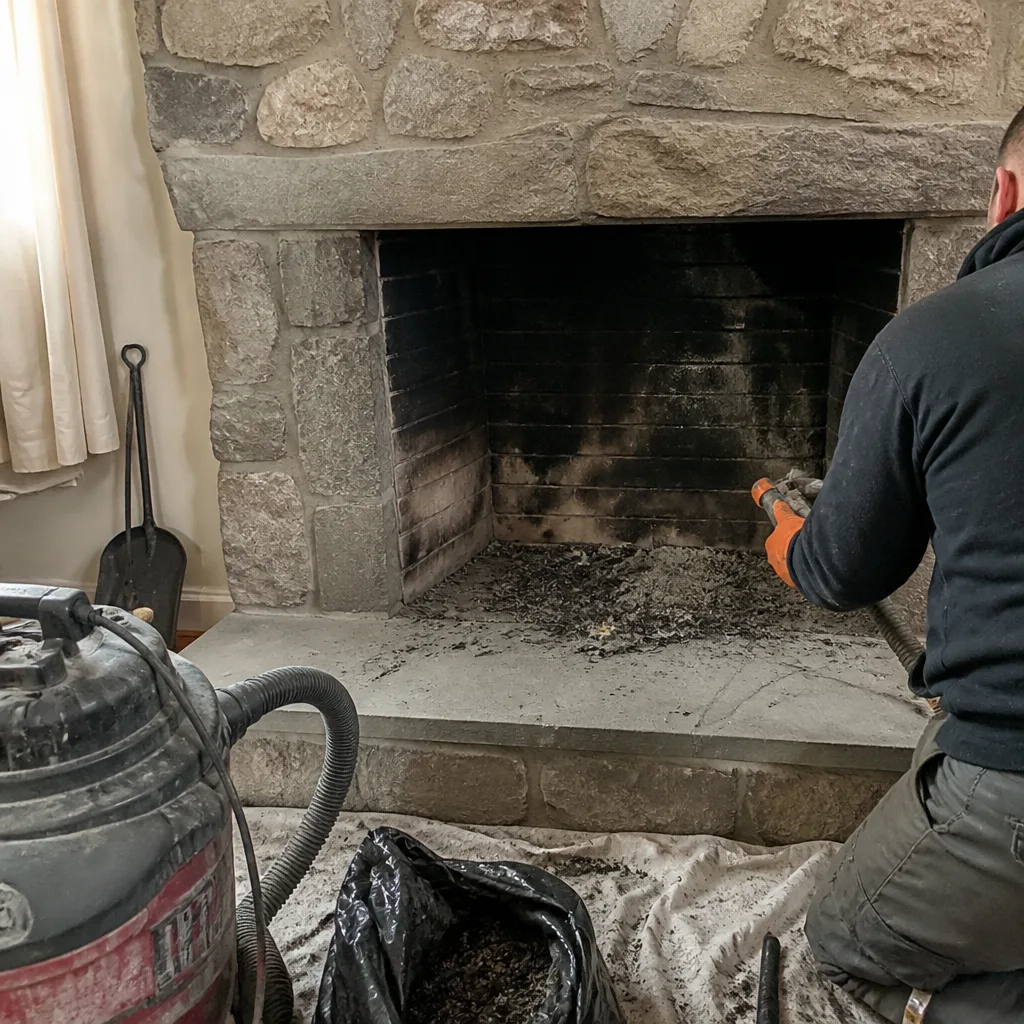 Before
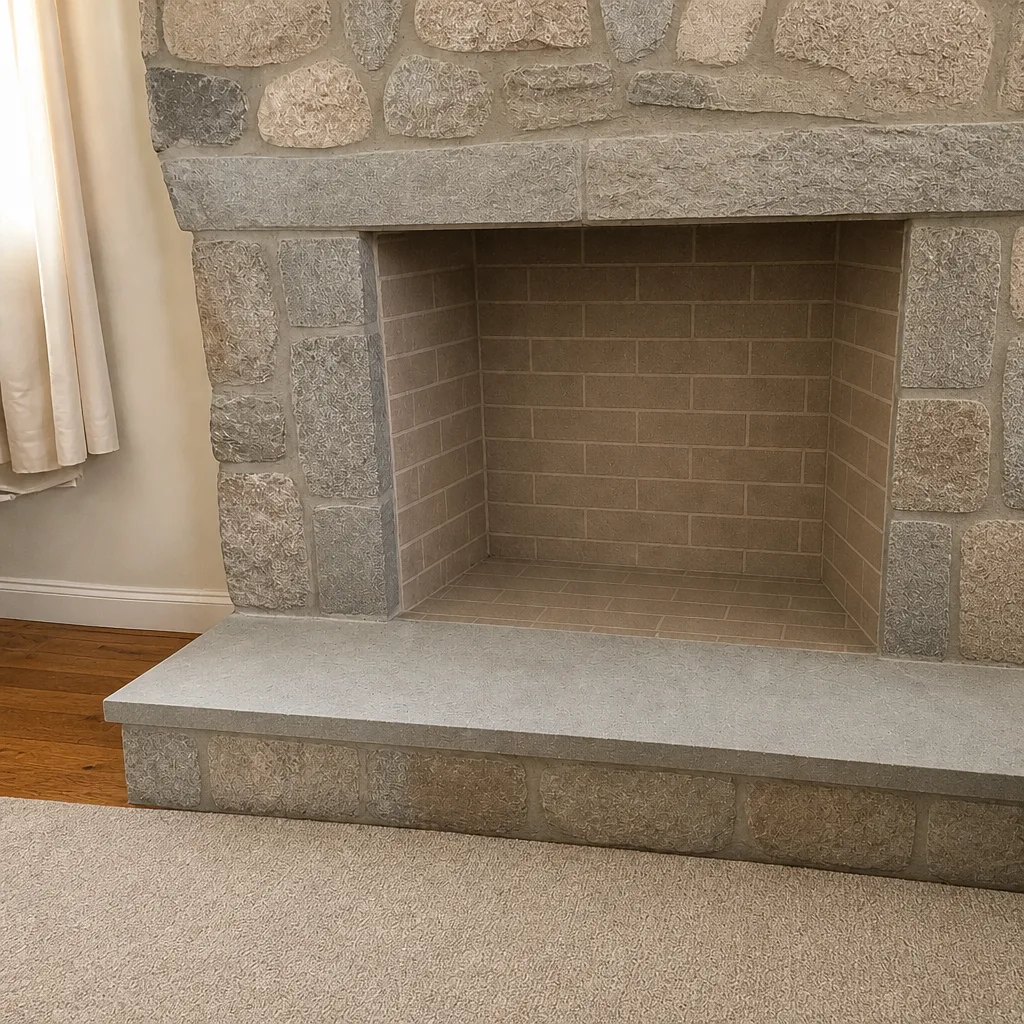 After
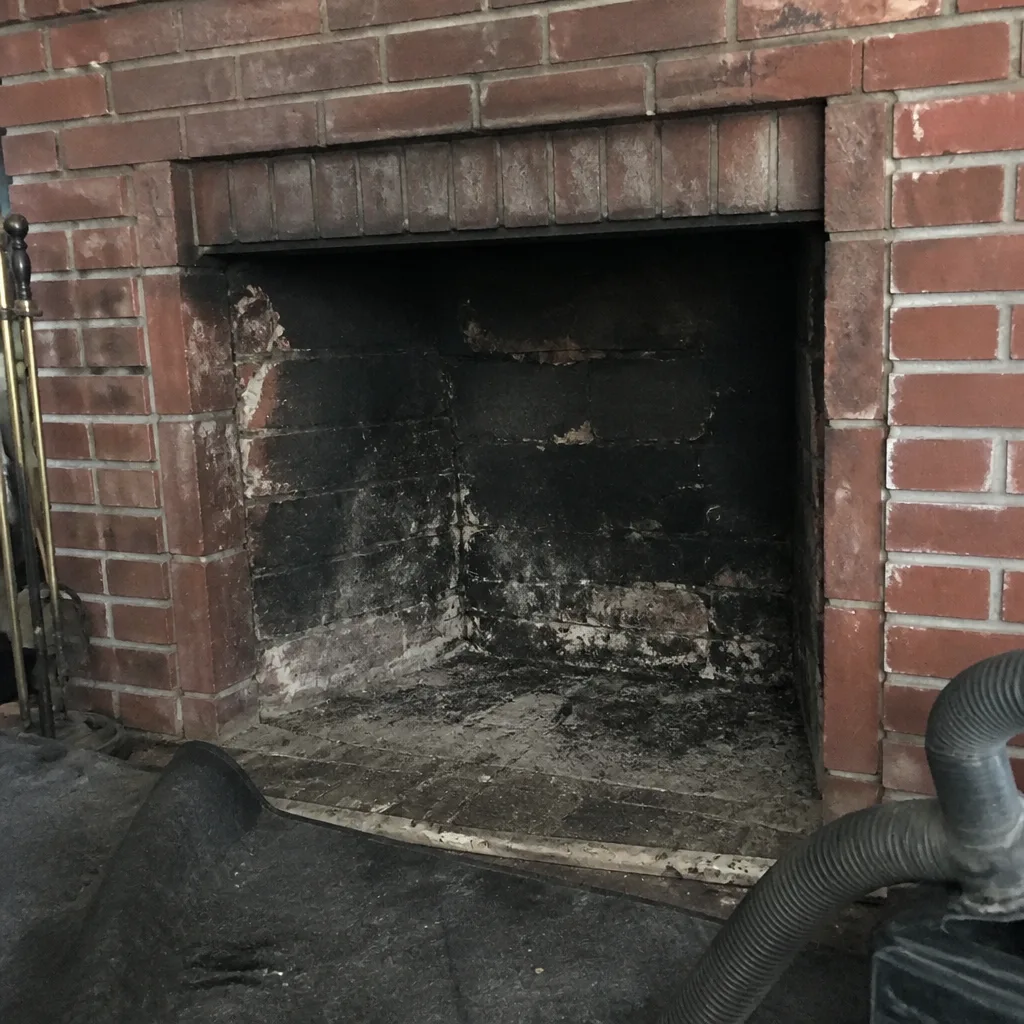 Before
 After
 Before
 After
When to Call a Professional
Call a professional if your fires burn poorly or smoke doesn’t draw, if you’ve burned a full season since the last sweep, if you see a cracked or damaged cap or crown, or if you notice moisture or staining on the masonry. If you burn heavily, call to set an interval rather than waiting for a problem. And a new-to-you home with an unknown chimney is a mandatory call. Lockhart Chimney Sweep offers free estimates in Springfield – call (855) 360-8122. We answer 24/7. Fast dispatch from 7am to 7pm, Sunday through Friday. Our technicians have up to 9 years of experience, and we offer three services under one roof – sweeping, inspection, and repair.
Frequently Asked Questions
A wood-burning chimney should be swept at least once a year, and more often if you burn heavily. The interval is driven by how much you burn and what you burn. Gas and pellet appliances usually need annual inspection rather than sweeping. If you’re not sure where you fall, track your cord consumption for one season and use that number to set your interval.
An annual sweep is the floor, but a full schedule in Springfield benefits from two looks: a fall sweep and inspection before burning season, and a spring moisture and freeze-thaw inspection in May or June. The spring check catches the effects of winter damage before the damp summer months begin. That two-track schedule is what a single annual appointment can’t cover.
Gas fireplaces rarely need sweeping, because gas burns cleanly and produces little soot. They do need an annual inspection of the venting and connections, since carbon monoxide is the concern with gas rather than creosote. Budget for an inspection each year and a professional look at any change in how the fire burns.
You can check the cap from the ground, watch how the fire draws, listen for unusual sounds after a fire, keep your firewood dry and covered, and test your smoke and carbon monoxide alarms. These monthly checks catch problems early. Any change in draft, odor, or fire behavior is a reason to book an inspection.
Sometimes, yes. A resurfacing system such as HeatShield is designed to restore deteriorated flue tile, so if the damage is caught early, resurfacing can be an alternative to relining. If the flue has offsets or bends, a flexible liner like DuraFlex may be the right fit. Either way, the answer comes from an inspection, not a guess, so call for an assessment before planning repair work.
A spring inspection catches the results of the winter freeze-thaw cycle: cracked masonry, loose mortar joints, crown cracks, flashing that has pulled loose, and water intrusion. A fall sweep focuses on clearing the flue before the next season. The spring check is where structural and moisture problems show up clearly, which makes May a smarter inspection month for catching winter damage in Springfield.
The Bottom Line
“Once a year” is a solid rule, and it’s the right place to start. It’s not the whole answer. Build your schedule around what you actually burn – wood, gas, oil, or pellet – and add a spring inspection in May or June to catch the winter’s freeze-thaw damage before the humid months set in. Track your cord consumption, keep the cap and crown sound, and let the annual visit include an inspection, not just a sweep. In Springfield, the seasonal rhythm is real, and a schedule that reflects it is better than one that ignores it. If you’re ready to set your own calendar, call (855) 360-8122. We answer 24/7, with fast dispatch from 7am to 7pm, Sunday through Friday, and free estimates in Springfield.
Written by the team at Lockhart Chimney Sweep.