
Last updated November 16, 2026
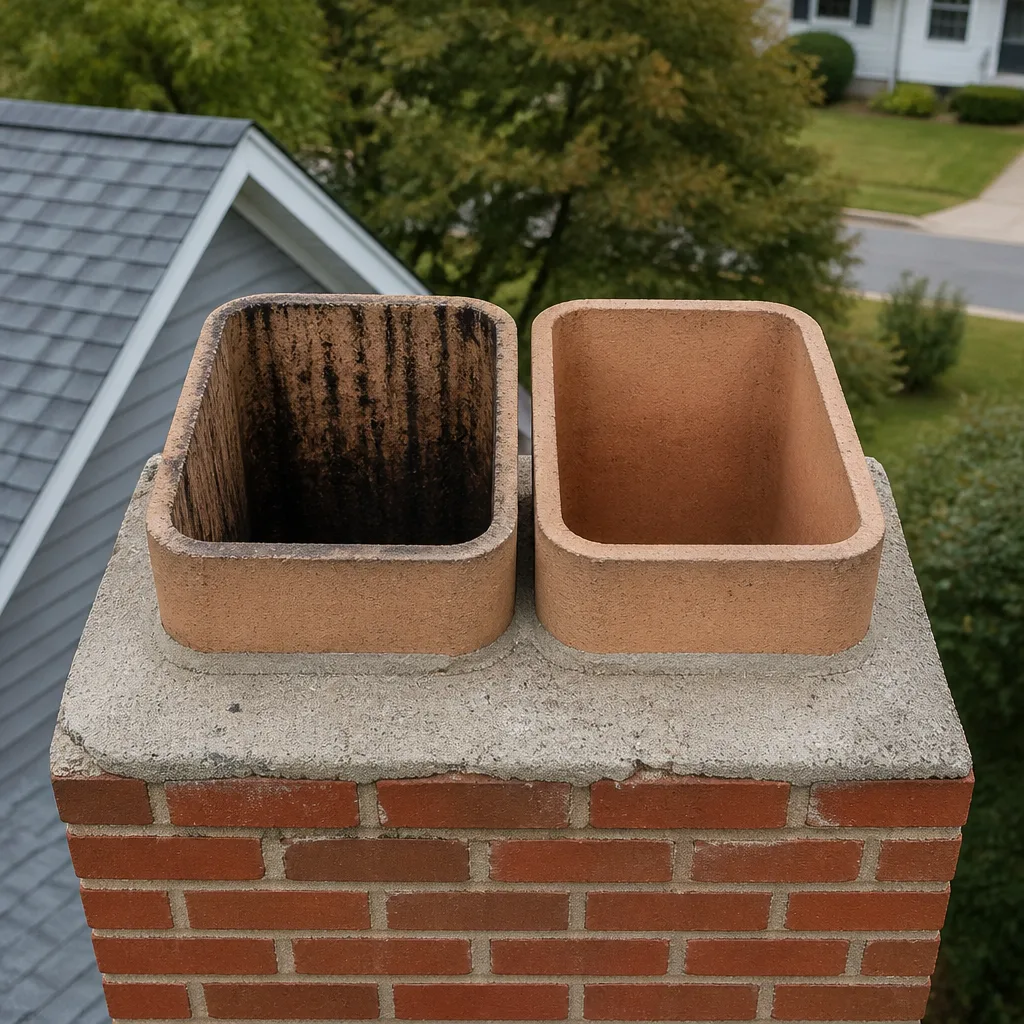 Sweep & inspection
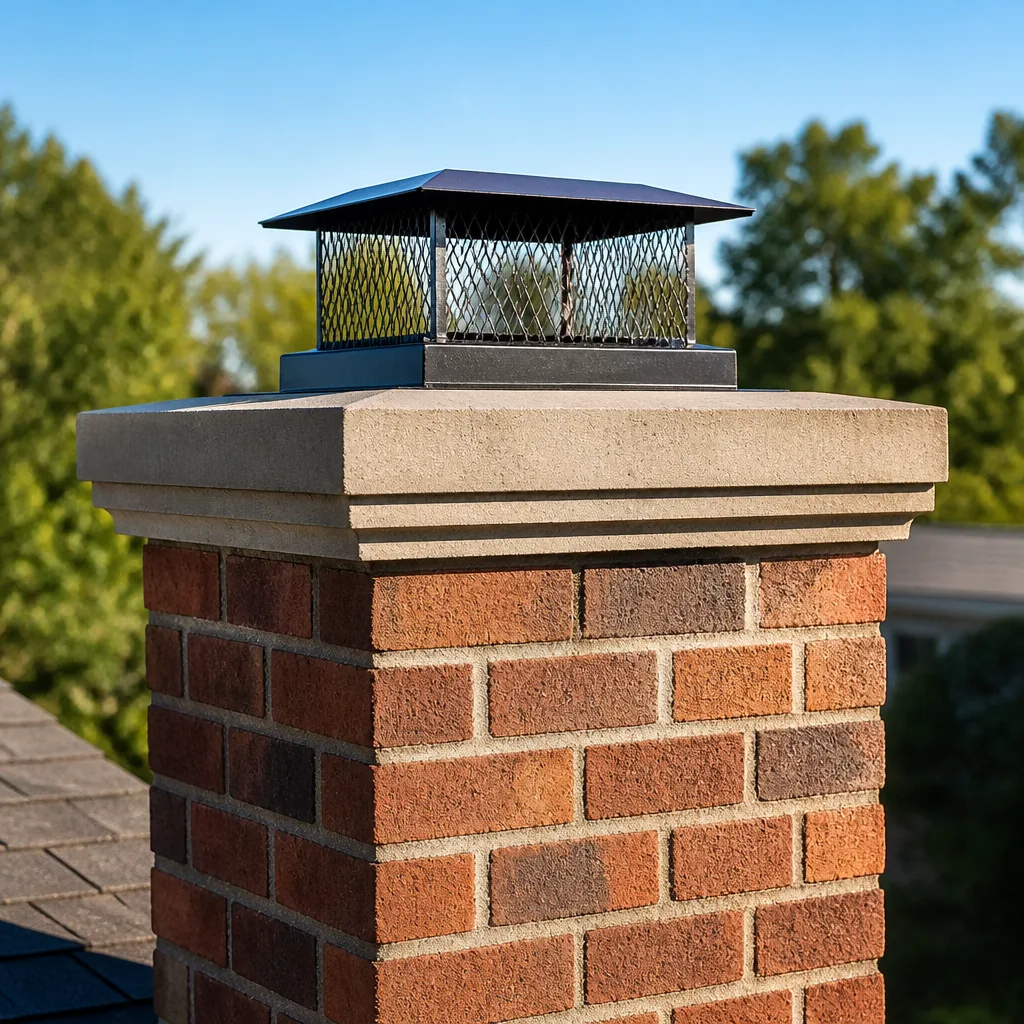 Caps & crowns
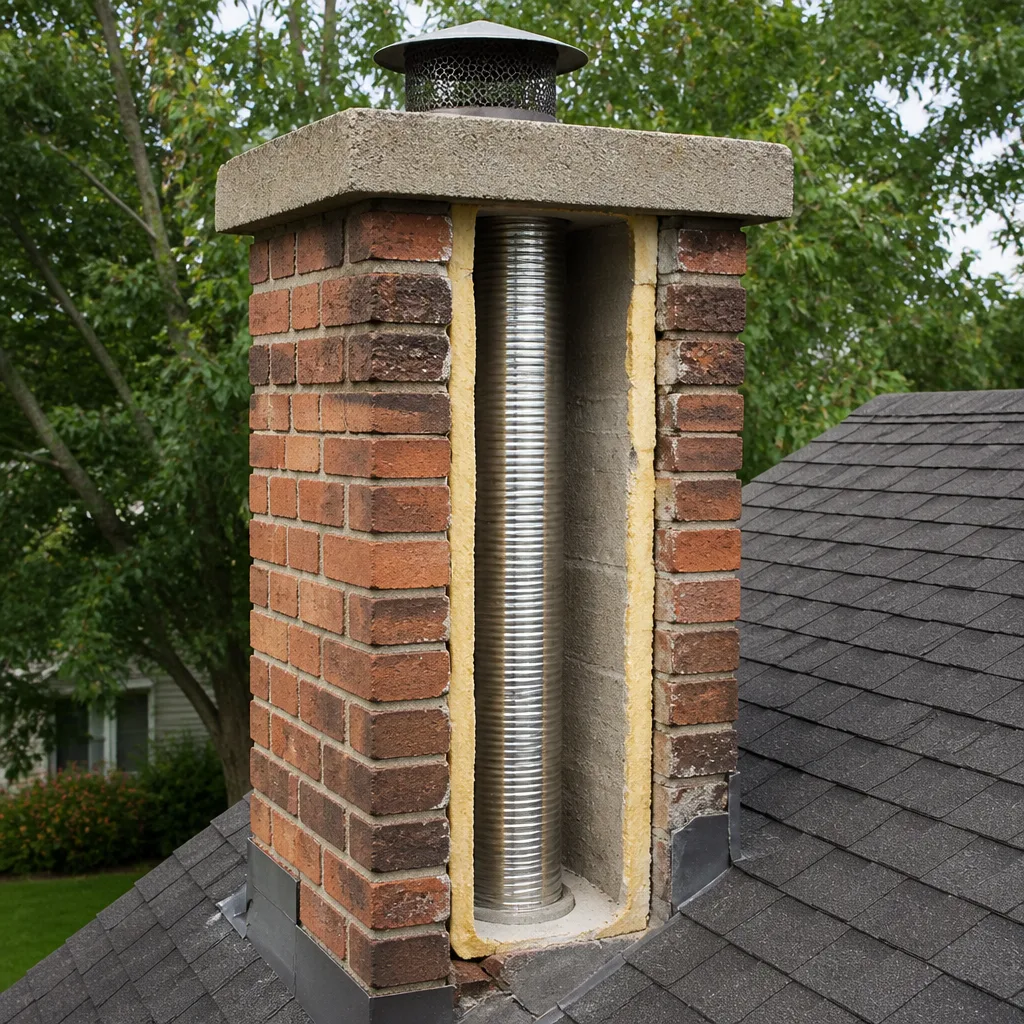 Flue relining
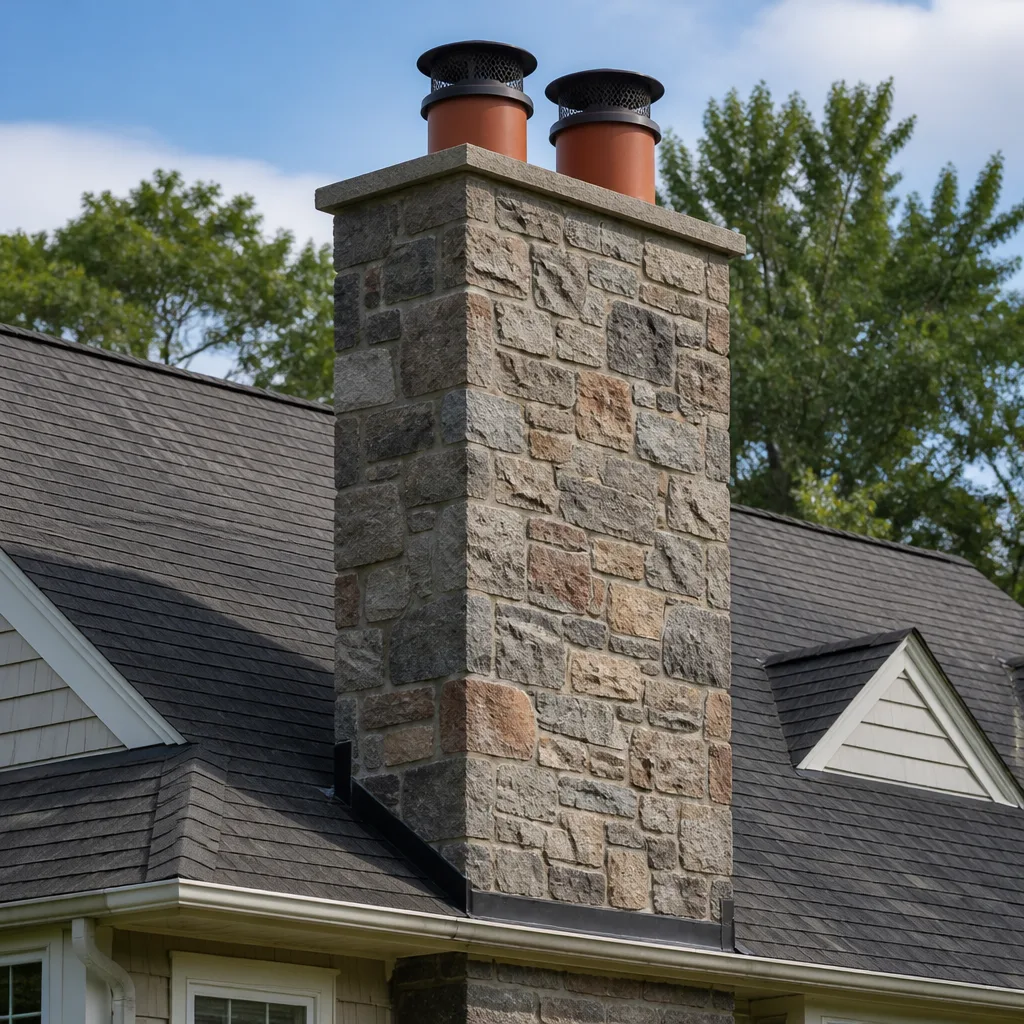 Masonry repair
 Gas fireplace service
Level 1 sweep and inspection to the NFPA 211 annual standard - flue, crown, cap, and flashing checked and photographed
Chimney sweep logs do not sweep chimneys. They loosen some creosote - which then falls where a brush and vacuum still have to collect it.
Chimney Cleaning Emergency Preparedness Guide for Springfield Homes
If you smell smoke in a room where there’s no active fire, closing the fireplace damper is the wrong instinct. It feels like the safe move, sealing off the source. But if the smoke is coming from a blocked or cracked flue pushing exhaust back into the house, closing the damper can trap carbon monoxide and drive it deeper into the living space instead of keeping it out. The right response depends entirely on which of three very different problems you’re actually facing, and you won’t have time to sort that out in the moment. This guide walks through how to tell a chimney fire from a draft reversal from a carbon monoxide event, what to do for each, and what to have ready before anything happens in your Springfield home.
Quick Answer
A chimney emergency is any situation where fire, smoke, or carbon monoxide is escaping the flue system in a way you can’t control. For a suspected chimney fire, evacuate, call 911, and don’t use water on the firebox. For smoke backing into the room with no fire, open a window and check whether your damper is stuck or your flue is blocked before assuming the worst. For a carbon monoxide alarm, get everyone outside and call the fire department, even if you can’t see or smell anything. Every one of these situations ends the same way: no fire until a professional has inspected the flue.
Styles & brands we work with
- Sweep & inspection
- Caps & crowns
- Flue relining
- Masonry repair
- Gas fireplace service
Table of Contents
- The Three Chimney Emergencies (And How to Tell Them Apart)
- What to Do During an Active Chimney Fire
- Why Springfield’s Older Home Construction Changes the Response
- How to Safely Shut Down a Compromised Fireplace or Furnace
- What to Document Before an Emergency
- The Post-Emergency Inspection: What Level 3 Covers
- Prevention: The Work That Makes Emergencies Less Likely
- Common Mistakes to Avoid
The Three Chimney Emergencies (And How to Tell Them Apart)
Every chimney emergency falls into one of three categories, and the response to each is different enough that confusing them can make things worse. Learning to tell them apart before you need to is the whole point of this section. In our experience responding to calls across Springfield, homeowners often describe one problem while actually experiencing another, which is why a phone diagnosis is only ever a starting point.
1. A Chimney Fire in Progress
A chimney fire is burning inside the flue itself, usually in the creosote that’s built up on the walls. The signs are distinctive if you know what to look for: a roaring sound like a freight train or a low rumble, popping and crackling that doesn’t match the fire in the firebox, dense smoke or flames visible at the top of the chimney, and a sudden strong draft pulling air into the fireplace. You may also see glowing at the chimney top or notice that the chimney pipe itself is hot to the touch. The fire may be small and self-extinguishing, or it may spread into the structure around the flue. You cannot tell which from the living room.
2. A Draft Reversal
Draft reversal means air is flowing down the chimney instead of up it. Smoke spills into the room, often when you first light a fire or on a cold, still morning. The fire might burn sluggishly, the smell of smoke lingers, and the room feels stuffy. A draft reversal is not necessarily dangerous on its own, but it can be a symptom of a blocked flue, a chimney that’s too short for the house, or a pressure imbalance in a tightly sealed home. The key difference from a chimney fire: you see smoke, but you don’t hear the roar and you don’t see flames at the top.
3. A Carbon Monoxide Situation
Carbon monoxide is the one you can’t see, smell, or taste. A CO alarm going off is the clearest signal, but symptoms in people matter too: headaches, dizziness, nausea, and confusion that seem to clear when you leave the house and return when you come back. A blocked or cracked flue, a disconnected vent connector, or a backdrafting furnace can all push CO into the living space. This is the emergency that most often gets misdiagnosed as something else, which is why a working CO alarm on every level of the home is non-negotiable for any Springfield house with a wood-burning appliance.
What to Do During an Active Chimney Fire
A chimney fire can go from a low rumble to a structural fire in a matter of minutes, and the decisions you make in the first few are the ones that matter. Work through this list in order and don’t skip steps because the fire seems small.
- Get everyone out of the house. Including pets. Don’t stop to gather belongings. Once you’re outside, stay outside.
- Call 911. Tell the dispatcher you have a chimney fire. Fire departments treat this as a structure fire until they can confirm otherwise, and that’s the right response.
- Close the fireplace doors and dampers only if you can do it safely. If the firebox is accessible and you’re not reaching through flame, closing the glass doors and the damper starves the fire of oxygen. If the firebox is already too hot to approach, leave it and get out.
- Don’t put water on the fire. A chimney fire can reach well over 1,000 degrees inside the flue. Water poured into an overheated firebox or onto a hot chimney can crack the flue tile or the metal liner, and a cracked flue turns a chimney fire into a house fire.
- Don’t use a fire extinguisher inside the firebox. Same reason: thermal shock can damage the flue, and the extinguisher won’t reach a fire that’s burning up inside the chimney.
- Don’t re-enter the house until the fire department clears it, even if the noise stops. Chimney fires can smolder inside wall cavities after the visible fire is out.
After the fire is out, the fire department will likely tell you the chimney needs an inspection before it’s used again. That’s not a formality. A chimney fire can crack flue tiles, warp a metal liner, and damage the mortar joints inside the chimney, and none of that is visible from the firebox. In Springfield, where a lot of homes have flues that have been in place for a long time, the damage from a chimney fire often shows up in places the fire department can’t see without a camera. Our chimney repair work after chimney fires usually starts with a camera inspection for exactly this reason.
Why Springfield’s Older Home Construction Changes the Response
Springfield has a lot of housing stock that predates modern chimney standards, and that changes how a chimney fire behaves inside the walls. Many of the city’s older homes were built with masonry chimneys that sit inside wood-framed wall cavities, sometimes with only a few inches of clearance between the outside of the chimney and the framing. In a newer home built to current code, that clearance is specified and inspected. In an older Springfield house, the clearance was whatever the mason did on the day, and nobody documented it.
What that means in practice: a chimney fire that reaches high enough temperatures can transfer heat through the masonry and ignite the framing behind it, even if the fire never escapes the flue. This is why the fire department treats a chimney fire as a structure fire and why they may open walls to check for extension. It’s also why the post-fire inspection has to go beyond the flue itself and look at the chimney’s exterior and the surrounding structure.
The other Springfield-specific factor is the mix of heating setups. A lot of homes here use a wood-burning fireplace or stove as a primary or backup heat source through the winter, and some have a furnace or boiler vented into the same chimney as the fireplace. When two appliances share a flue and one of them fails, the failure can affect the other. That’s one reason we ask about every appliance connected to a chimney before we assess it. Our technicians have up to 9 years of experience, and a good chunk of that experience has been in figuring out how a chimney fire or a CO event actually started, which usually means looking at the whole system, not just the firebox.
How to Safely Shut Down a Compromised Fireplace or Furnace
If a flue is compromised (cracked liner, blocked chimney, damage from a fire) the appliance connected to it needs to stay off until it’s been inspected. Here’s how to shut down each type of appliance safely.
Wood-Burning Fireplace or Stove
- Let the fire burn down naturally if it’s controlled and contained. Don’t try to smother a large fire with water or a wet blanket.
- Close the glass doors and the air control to reduce oxygen to the fire once it’s burning low.
- Close the damper only after the fire is fully out and the firebox has cooled. Closing it on a smoldering fire traps smoke and CO in the house.
- Remove ashes only after everything is cold. Ashes can hold heat for a long time, and a bucket of ash on a wood floor is a fire risk.
- Put a physical reminder (a note on the fireplace, a piece of tape over the handle) so nobody in the household lights it again before the inspection.
Gas Insert or Gas Log Set
- Turn the appliance off at the wall switch or the remote, then shut the gas supply valve if you can reach it safely. If you smell gas, leave the house and call the gas utility from outside.
- Don’t relight a gas appliance connected to a compromised flue until it’s been inspected. Gas appliances produce CO, and a damaged flue doesn’t vent it.
Furnace or Boiler Vented to the Chimney
- Shut the appliance off at the thermostat or the service switch.
- If the appliance is your only heat source in cold weather, don’t run it on a compromised flue. Use space heaters safely and get the chimney assessed before you turn the furnace back on.
- If a CO alarm has gone off and the furnace is connected to the chimney, treat it as a furnace venting problem until proven otherwise. The furnace may be the source even if the fireplace isn’t in use.
In every case, the goal is to keep the appliance off until a professional has looked at the flue with a camera. Lockhart Chimney Sweep handles chimney inspection and repair as part of our core work, and we’ll tell you plainly whether the flue is safe to use, needs a repair, or needs to stay off. We work with professional-grade liner and resurfacing products including DuraFlex and HeatShield, which means we can often offer a repair option short of full relining when the damage is caught early.
What to Document Before an Emergency
When the fire department arrives, they need to know what’s inside the chimney. A lot of the information they’d ask for is information you can have ready before anything happens, and having it on hand shortens the response and helps the inspector know what to look for. Here’s what to keep in a folder, a note on your phone, or taped inside a kitchen cabinet.
- The liner type. Clay tile, stainless steel, or something else. If you’ve had a liner installed, the paperwork should say what kind. If you don’t know, the last inspection report should tell you, or an inspection can determine it.
- The date of the last inspection and sweep. Not the year you think you had it done, the actual date from the paperwork.
- Appliance specifications. The make and model of your fireplace insert, stove, furnace, or boiler, and how each one is vented. A photo of the data plate on the appliance is enough.
- The chimney’s construction. Masonry or prefabricated metal, interior or exterior, straight or offset flue. A photo of the chimney from the roof and from the ground helps.
- Any known issues. A cracked tile noted on a past inspection, a draft problem you’ve been meaning to deal with, a chimney cap that came loose. Write it down when you notice it.
This documentation matters for two reasons. First, it helps the fire department understand what they’re dealing with faster. Second, it helps the inspector distinguish between damage that was already there and damage caused by the event, which matters for your insurance claim. In our experience, homeowners who have their inspection paperwork ready have a much smoother time after an emergency than those who are starting from scratch.
The Post-Emergency Inspection: What Level 3 Covers
After a chimney fire or a CO event, the inspection that’s needed is a Level 3 inspection. There are three levels of chimney inspection, and each one covers more ground than the one before it.
- Level 1 is the standard inspection that goes with a routine sweep. It covers the readily accessible parts of the chimney and venting, with the firebox, damper, and visible flue from the top and bottom.
- Level 2 is what’s required when a home changes hands, when an appliance is replaced, or when there’s been a change in the system. It includes a camera scan of the flue interior.
- Level 3 is what’s required after a chimney fire, a building fire, an earthquake, or any event that may have caused hidden damage. It’s the most thorough level, and it can include opening walls or removing parts of the chimney to access concealed areas.
A Level 3 inspection is the one that tells you whether the chimney is safe to use again, and it’s the one that produces the documentation you’ll need for your insurance claim and for any repair work. The inspection should cover the flue interior with a camera, the chimney exterior, the crown, the flashing, and the surrounding structure where it’s accessible. If a wall needs to be opened to check for heat transfer into the framing, that gets noted and discussed before anyone starts cutting.
Don’t relight the fireplace or restart the furnace until the Level 3 inspection is done and you’ve been told the system is safe. A chimney that looks fine from the firebox can have a cracked tile or a warped liner that won’t show up without a camera. We can’t tell you what’s inside your flue without looking, and neither can anyone else. Once the inspection is done, the report should tell you in plain language what was found, what needs repair, and what can safely wait. If you’re in Springfield and you’ve had a chimney fire or a CO event, our Lockhart Chimney Sweep team can walk you through the inspection process.
Prevention: The Work That Makes Emergencies Less Likely
Most chimney emergencies start with something that was visible months earlier and nobody looked at. A cracked flue tile, a loose cap, a creosote layer that’s gotten thick enough to ignite. Scheduling a chimney sweep before burning season and an inspection alongside it catches most of these problems while they’re still cheap to fix.
Creosote is the main culprit in chimney fires. It accumulates on the flue walls as a byproduct of burning wood, and it comes in stages: a light soot that brushes off, a crusty layer that’s harder to remove, and a glazed, tar-like layer that’s the most flammable and the hardest to clear. How fast it builds depends on what you burn, how hot your fires run, and how often you use the fireplace. Burning dry, seasoned wood and avoiding long, smoldering fires slows the buildup, but it doesn’t eliminate it. The only way to know how much creosote is in your flue is to look.
A chimney cap is the other cheap preventive measure that gets skipped. A cap keeps rain, animals, and debris out of the flue. A flue with no cap, or a cap that’s come loose in a storm, is an open door for a blockage, which is one of the most common causes of a draft reversal or a CO event. We work with Gelco, Olympia Chimney, Famco, and Copperfield components, so if your cap is missing or damaged, replacing it is a straightforward fix.
Finally, a working carbon monoxide alarm on every level of the home and near every sleeping area is the single most important prevention step for CO events. Test it monthly and replace the batteries according to the manufacturer’s schedule. An alarm that doesn’t work is the same as no alarm.
Common Mistakes to Avoid
- Closing the damper when you smell smoke with no fire. If the smoke is coming from a blocked flue pushing exhaust back into the house, closing the damper can trap carbon monoxide in the living space. Open a window first and find out what’s actually happening.
- Pouring water on a chimney fire. The thermal shock can crack the flue tile or warp a metal liner, turning a contained chimney fire into a structural problem. Get out and call 911 instead.
- Relighting the fireplace after a chimney fire without a Level 3 inspection. The fire may have damaged the flue in ways you can’t see from the firebox. Wait for the inspection report.
- Assuming a CO alarm is a false alarm. If it goes off, treat it as real until proven otherwise. Get everyone outside and call the fire department. A CO alarm that “keeps going off for no reason” usually has a reason.
- Burning unseasoned or wet wood. It burns cooler and produces more creosote, which is exactly the fuel a chimney fire needs. In Springfield’s climate, wood that’s been stored outside needs time to dry before it’s ready to burn.
- Skipping the annual inspection because the fireplace “seems fine.” Fine is what you can see from the firebox. The dangerous stuff is inside the flue and on the roof, and it’s invisible without a camera and a set of eyes on the chimney exterior.
- Running a furnace or boiler on a flue that serves a fireplace with known damage. Shared flues are common in older Springfield homes, and one appliance’s failure can affect the other. If either one is compromised, both should be assessed.
See the difference
 Before
 After
 Before
 After
 Before
 After
When to Call a Professional
Call us when you’ve had a chimney fire, when a CO alarm has gone off, when smoke is backing into the room and you can’t find an obvious cause, or when you’ve noticed damage to the chimney itself (cracked masonry, a loose cap, visible deterioration at the crown). Call us before burning season if it’s been more than a year since your last inspection. Call us if you’re not sure whether what you’re seeing is a problem, because “not sure” is a good reason to have someone look. Lockhart Chimney Sweep offers free estimates in Springfield. Call (855) 360-8122. We answer 24/7. Fast dispatch from 7am to 7pm, Sunday through Friday. A call outside dispatch hours is booked into the next opening, Sunday through Friday, 7am to 7pm.
Frequently Asked Questions
A chimney fire makes noise: a roar, a rumble, or loud popping that doesn’t match the fire in the firebox, and you may see flames or dense smoke at the top of the chimney. A draft problem brings smoke into the room without the noise and without flames at the top. If you hear the roar, treat it as a chimney fire, get out, and call 911. If you’re not sure, call the fire department and let them make the call.
Get everyone out of the house and call the fire department from outside. Don’t try to find the source yourself, and don’t assume it’s a false alarm. Once the fire department has cleared the house, the chimney and any appliance vented to it need an inspection before you use either one again. A blocked or cracked flue is one of the common ways CO gets into a home, and it won’t fix itself.
Yes. A Level 3 inspection is the level that’s appropriate after a chimney fire because it looks for hidden damage that a routine inspection won’t catch, including damage inside the chimney structure and behind the walls. A chimney that looks fine from the firebox can have cracked tiles or a warped liner. The inspection gives you the documentation you need for insurance and for any repair.
Not until the chimney has been inspected and you’ve been told it’s safe. A “small” chimney fire can still crack a flue tile or damage a liner, and the damage isn’t visible without a camera. Relighting before the inspection risks a second fire or a CO event through the damaged section.
Have your liner type, the date of your last inspection, the make and model of every appliance vented to the chimney, and a description of the chimney’s construction (masonry or prefab, interior or exterior). Photos help. Keep this in a folder or on your phone so it’s ready when someone asks.
Once a year is the standard recommendation for any chimney in use, and more often if you burn wood heavily or have noticed draft problems, odors, or visible deterioration. An annual inspection catches creosote buildup and small damage before either turns into an emergency. If it’s been more than a year, it’s time. Call (855) 360-8122 for an exact quote. Estimates are free.
The Bottom Line
The difference between a close call and a serious loss usually comes down to knowing which emergency you’re facing. A chimney fire needs evacuation, a 911 call, and no water. A draft reversal needs an open window and a look at the flue. A CO event needs everyone outside and the fire department. After any of them, the flue stays off until a Level 3 inspection says otherwise. Keep your documentation ready, keep a CO alarm working on every level, and get the annual inspection done before burning season. If you’re in Springfield and you need a chimney looked at, call (855) 360-8122 for a free estimate. We answer 24/7. Fast dispatch from 7am to 7pm, Sunday through Friday.
Written by the team at Lockhart Chimney Sweep.